If your house was roofed a while back, there’s a good chance it has 3-tab shingles: flat, even rows with a notch every foot or so, like a brick pattern. Maybe a few tabs are flapping in the wind now, or the last hailstorm left dents you can see from the yard. You’re wondering whether 3-tab shingle roofing in the Denver metro can still be repaired, or whether the whole roof needs to go.
It’s a reasonable question, and you deserve a straight answer, not a sales pitch for the most expensive option on the sheet.
APC Roofing has worked on shingle roofs since 2017. We’re GAF Certified, licensed and insured, and your inspection is free. Call 720-902-6940 to have your roof looked at.
How to tell if your roof is 3-tab
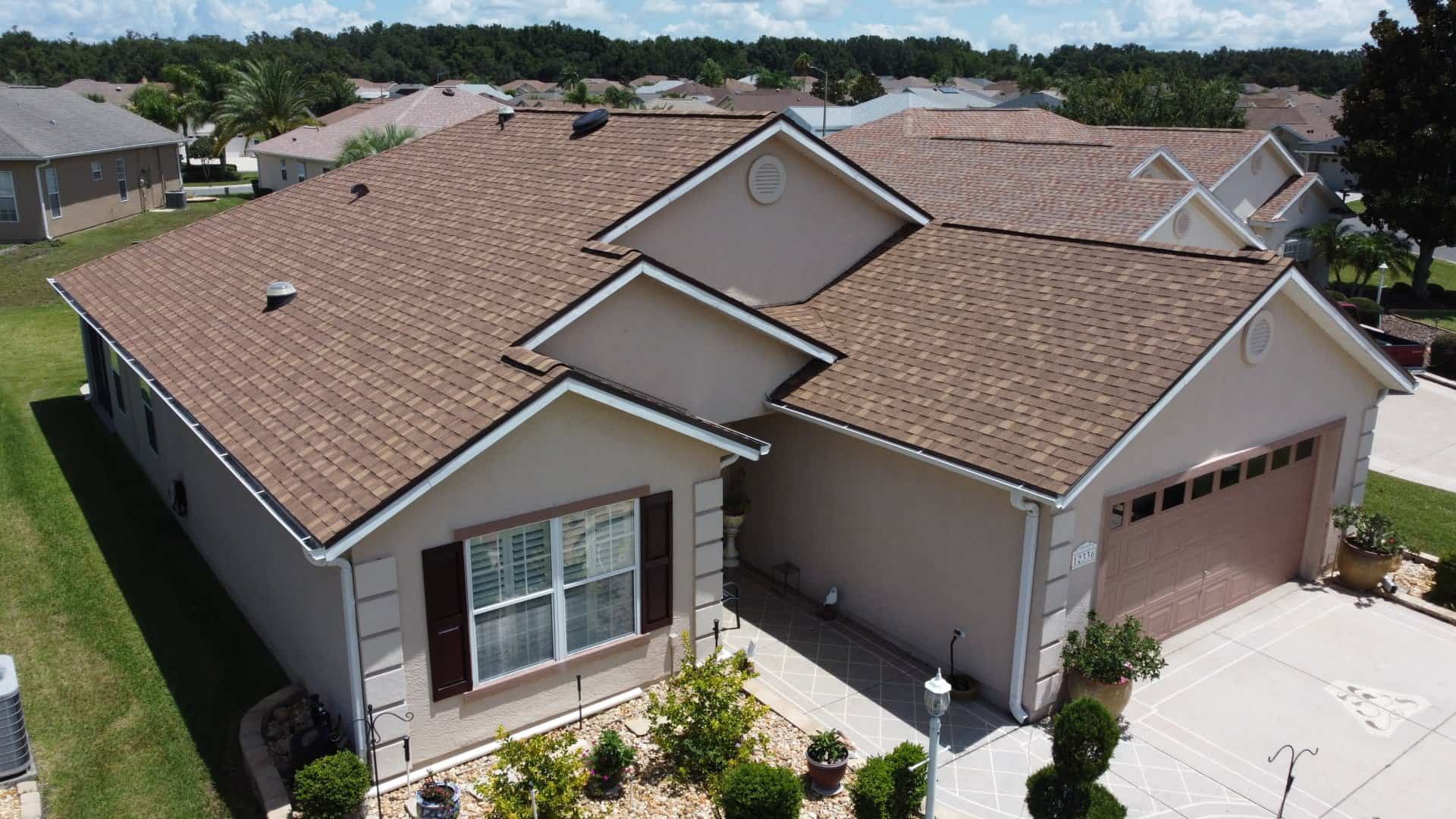
Stand across the street and look at the roof. A 3-tab roof has a flat, uniform pattern: each shingle strip is one layer thick and cut into three equal tabs, so the rows look like neat bricks. Architectural shingles, the more common choice today, are two layers laminated together. They look thicker and more uneven, with a shadowed, textured pattern.
If you aren’t sure, the inspection answers it in a minute.
How 3-tab shingle roofing in the Denver metro holds up
3-tab shingles are lighter and thinner than architectural shingles, and that shows up here in a few ways.
Wind. Each tab is held flat by a strip of sealant that bonds in warm weather. Over time, and especially after strong gusts, that bond lets go. Unsealed tabs lift, flap and eventually crease or tear off. If you’ve found single tabs in the yard after a windy day, that’s the usual cause.
Hail. A single-layer shingle has less material to absorb an impact. Hail can crack the mat or knock granules loose, leaving dark spots that wear faster in the sun.
Sun and cold. Strong UV at altitude dries shingles out, and winter cold makes them brittle. An older 3-tab roof can crack when it’s walked on or bent on a cold day.
None of that means your roof is failing. It means a 3-tab roof here is worth checking after big storms.
Repairing a 3-tab roof
Many 3-tab problems can be fixed without a new roof. Common repairs include:
- Resealing lifted tabs so they lie flat again
- Replacing torn or missing tabs and strips
- Fixing nail pops and resealing flashing around pipes and chimneys
The catch is matching. Fewer 3-tab colors are made today than were made years ago, and an older roof has faded. New shingles may not match exactly, so a repair can show. On the back slope that may not bother you. On the front of the house it might, and you’ll see the closest match available before you decide.
For a broader look at shingle repairs, see our shingle roof repair page.
When it’s time to replace a 3-tab roof
A repair stops making sense when the tabs are lifting all over the roof, the shingles are brittle and cracking, lots of granules are washing into the gutters or there’s hail damage on several slopes. At that point, patching becomes a cycle.
When you replace, you don’t have to put 3-tab back on. Most homeowners in the metro move to architectural or impact-resistant shingles, which are thicker and handle wind and hail better. You can compare options on our asphalt shingle roofing page, and see the installation process on our shingle roof installation page. Some insurers offer a premium discount for impact-resistant shingles, so ask your agent.
3-tab still has a place. On a detached garage, a shed or an outbuilding, its lower material cost can make sense.
Hail damage and your insurance
If hail or wind damaged your 3-tab roof, you file the claim with your insurance company and pay your own deductible. We document the damage with photos, give you a written estimate and work with your adjuster. Be wary of anyone who offers to waive or cover your deductible.
How it works
- Book your free inspection. Call 720-902-6940 or request a free estimate online.
- Get a clear, honest assessment and estimate. Photos of your shingles, a repair-or-replace answer and a written estimate. Financing is available through Aqua Finance, Fortifi, Hearth and Home Run Finance.
- Get the work done and the site cleaned up. Many residential re-roofs are finished in a single day, and the crew cleans up before leaving.
Lifted tabs don’t fix themselves. Each windy day after the seal breaks makes it more likely the tab tears off and lets water reach the underlayment.
3-tab shingle questions
Are 3-tab shingles still made?
Yes, though in fewer colors and styles than before. Most new residential roofs use architectural shingles instead.
Can I mix 3-tab and architectural shingles on one roof?
You can on separate slopes, but they look different side by side. On the same slope, it usually looks like a patch.
Why are my shingle tabs flapping?
The sealant strip under the tab has let go, usually from age, wind or cold. Lifted tabs can often be sealed back down if the shingle isn’t creased or torn.
Is 3-tab less expensive than architectural?
The material usually costs less. Over time, though, a thinner shingle in hail and wind country may need repairs or replacement sooner, so look at the whole picture, not the material line alone.
A roof that lies flat and stays that way
Call 720-902-6940 or book your free inspection online. You’ll find out whether your 3-tab roof has more years in it or whether it’s time for something tougher. Either way, you’ll end up with shingles that stay put in the wind and a house that stays dry.