Trying to find Commercial Roof Repair in Kansas City Missouri?
APC Roofing installs and mends membrane and metal coverings on business buildings, including the drains, curbs and flashings.
Phone 913-398-5020 and a roofer will inspect the whole surface and report back.
Above a Shop or Office – Some Background
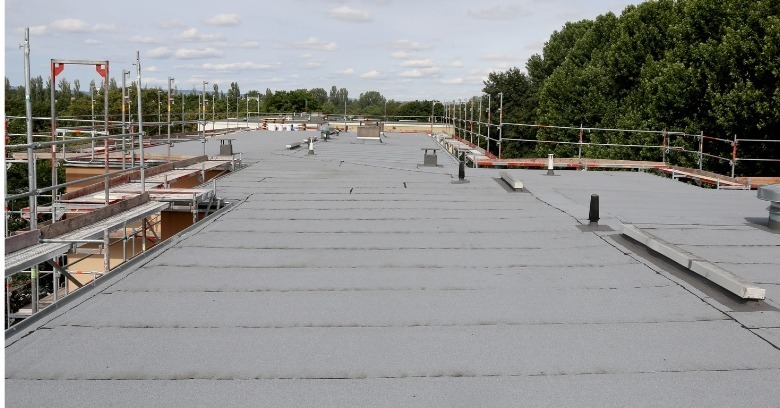
Staff, stock and machinery sit beneath the membrane, so a drip can shut down a shift instead of staining a tile. A big footprint is covered at a gentle grade, and runoff and uplift are engineered rather than guessed.
Condensing units, exhaust stacks and antennas are spread across the top, and each support, line or duct gets careful flashing. The business inside shapes the choice of system, and a freezer warehouse needs details an office never does.
Common Low-Slope Materials – Names Decoded
TPO, PVC and EPDM are single-ply products made as one flexible layer, modified bitumen is rubberized asphalt sold by the roll, and built-up roofing piles felt and tar ply on ply. Thermoplastic seams are welded with heated air, whereas a rubber splice depends on primer and tape.
Kitchen exhaust leaves a film of grease around a restaurant's fans, and oily residue softens asphalt and EPDM, so the stretch nearby is often PVC. A stone-covered built-up system is weighty and tough, and the surfacing blocks sun that would dry out the bitumen.
Steel Over a Warehouse – Wear Over Time
Exposed-fastener sheets are secured with screws through the flats, and each shank anchors in the framing below. The neoprene washer at each head dries out under years of sunlight, and daily heating and cooling gradually loosen the fasteners.
A standing-seam roof is held by clips folded into the ribs, so each pan can creep as the metal grows and shrinks. Corrosion gathers where sheets overlap and at trimmed ends, and a retrofit coating can give sound metal more years of service.
Decking on Big Buildings – Why the Base Counts
How the system is held down is set by the structure under the insulation, and a new covering goes over the same framing. Ribbed steel accepts screws with no trouble, concrete wants adhesive or expansion anchors, and wood or gypsum plank uses fasteners rated for the material.
Years of dampness can corrode metal decking in patches, and a damaged area is removed and a new piece fastened in place. The structure's underside is checked from indoors when access permits, and small cores from above show the rest.
How a Membrane Is Secured – Pros and Cons
Some commercial sheets go down with plates and screws at the seams, adhered work is glued from edge to edge, and ballasted sheets lie loose under stone or pavers. The deck, the building's height and the site's exposure steer the decision, and a heavy design goes ahead only once the framing is confirmed adequate.
Between the plates, a fastened sheet balloons in stiff gusts, whereas a glued sheet holds steady on a clean, dry substrate. A ballasted layout turns inspection into a slow job, because gravel or pavers must come off before anyone sees a joint.
Wind Across a Wide Roof: Setting the Screw Pattern
Each corner feels the hardest pull, because swirling eddies form where the air crosses the perimeter. The strip down each side carries a smaller share, and the open middle is loaded more gently.
Fasteners go in closer together near corners and edges, with the layout drawn from design tables for the site. A thinly anchored outer angle can peel back, and pressure underneath can strip a wide section.
Foam Insulation: Doing Double Duty
Polyisocyanurate panels cover the deck with offset joints, and a tough cover board over the stack takes foot traffic. Insulation keeps conditioned temperatures indoors, and tapered pieces create the fall that sends rain to the outlets.
Moisture in polyiso drives the R-value down sharply, and the heavy mass adds weight and rusts a steel deck. An infrared scan at dusk, backed by cores, outlines the affected zone, and spoiled sections come out while new stock goes in.
Getting Rain Off – Parts of the System
Each interior sump wears a cast strainer dome, which keeps litter from entering the pipe. Once silt coats the grate, flow drops sharply, and a ring of ponding widens outward.
A secondary outlet is set slightly above the everyday drain, so a steady spill up high signals a blockage below. Rain held across a wide area can put tons onto the beams, and a puddle still there two days after a storm indicates a sag or a matted strainer.
Leak Hunting on a Large Building – Patience Pays
A stained ceiling tile marks only where the drops fell, yet the defect up top may be dozens of feet distant. Corrugated decking channels seepage the length of the building, and joints between foam panels open more paths.
The roofer works uphill of the stain along laps, curbs and outlets, and a flood test on a small section can reveal a stubborn leak. Sealing whatever sits above the soggy tile rarely fixes anything, and moisture finds a way in at the next storm.
Package Units Overhead: Where Care Is Needed
A sturdy curb holds each machine clear of the membrane, and flashing wraps the sides up to a sheet-metal cover. Corner work calls for patient hands, and a poorly sealed crease admits rain.
A new unit from the HVAC contractor may sit on an adapter with no flashing, and water reaches the office below soon enough. A trickle from a condensate pipe wears a streak of slime into the membrane, and the water should be routed to a drain.
Objects That Rise Above the Surface – the Small Stuff
Round stacks take a factory-made boot with a stainless band, and anything irregular is dammed with a pan and filled with pourable sealer. Sun and seasons shrink the compound until cracks open, which makes a refill a normal maintenance task.
Runs of conduit and gas line rest on unattached blocks, since every screw driven through the sheet is a future leak. Each base needs a protective pad beneath, so heat and vibration scuff the buffer instead of the membrane.
Hinged Covers Up Top: Common Faults
Acrylic panes yellow and turn fragile after years of sun, and cracks spread from the screws at the rim. A shrunken gasket or a separated miter lets water through, and the drip is often charged to the covering.
Every trip up the ladder means lifting the hatch cover, which wears out the springs, latch and weatherstrip. Automatic smoke vents are built to burst open during a fire, and no roofing work may block the mechanism.
The Low Wall Around the Edge – What Goes Where
At the vertical face, the sheet climbs as base flashing, a screwed termination bar secures the top, and counterflashing hangs down to shield the fastened line. Coping over the crest steers rain to either side, though a cracked seam beneath lets runoff in.
Brick and block soak up a long downpour, and to anyone downstairs the wet ceiling seems like a roof leak. An inspection covers the coping, the counterflashing and the wall as well as the membrane, and a gap in the mortar is repointed, never just caulked.
Fascia Metal at the Outer Edge – Wind at the Border
Along the eave, a long cleat grips the hemmed lip of the flange, and a strip of membrane seals the joint on top. The profile chosen has to be rated for wind at the building's elevation, since loose metal becomes a lever that gusts use against the field.
An eave gutter on a big building collects runoff from a vast surface, and skimpy hangers or leaders lead to overflow and sagging. Bent or lifted trim belongs on the repair list, and fastening down loose runs helps stop the membrane peeling away.
Visitors Who Are Not Roofers: Setting Some Ground Rules
Electricians, cable installers and HVAC crews all make regular trips up, and a path gets a little more scuffed each season. An abandoned screw gets forced through the sheet by a passing boot, and an access panel set down on a corner slices a gash.
Thick rubberized pads trace a safe path to each unit, and wear ends up on material built for foot traffic. Managers can require contractors to keep off the unprotected sheet, and a bucket for scraps and screws keeps the membrane clear.
Scheduled Inspections: Small Jobs Kept Small
Twice annually is a sensible rhythm for a walk-through of a commercial system, and a damaging storm earns an additional check. Good upkeep empties drain baskets of leaves and litter, seam edges are tested with a probe, and sealant at pockets and terminations is pressed for give.
Before the stormy part of the year, attention goes to outlets and perimeter flashing, and a second pass seeks out what heat or heavy rain disturbed. Small problems are noted against a drawing of the building, and trouble shows up long before water comes through.
Paperwork Worth Keeping – Notes That Help
A marked-up plan locates every unit, drain and hatch, and a section view names each material from deck to membrane. A dated photo log follows each repair, and new moisture findings are added over the years.
Older properties frequently hold no notes on the covering, so the same facts get rediscovered with each visit. Roof documentation outlasts any single service firm, and a copy travels with a sale.
Mend, Coat or Start Over – Matching Work to Condition
Localized faults on a healthy sheet are patched in place, while a tired but dry surface can carry a silicone or acrylic layer. Insulation ruined over broad areas points to tear-off, and so do seams that crack wherever flexed, though years alone never decide the matter.
Any restoration coating depends on a washed, repaired substrate, and material below that holds water never dries out. Taking out just the spoiled areas occasionally works as a halfway measure, provided the rest of the field has good years left.
The Reroofing Decision: Code and Condition
A recover lays new membrane over what is already there, and a board is placed between old and new. Code permits a second covering, never a third, and the foam underneath must be dry.
A tear-off removes every component down to the structure, and damaged sections of deck are mended while exposed. A new tapered layout can shed standing water, and crickets between drains split the runoff.
Signs Worth Reporting: What to Look Into
- Water pouring from an overflow scupper during rain, which betrays a choked everyday outlet.
- Discolored ceiling panels that darken after wet weather, which shows moisture has worked through the insulation.
- Blotches or efflorescence on brick under the coping, which can signal water entering the masonry.
- Fascia metal that flutters or rattles in a gust, which can give wind a place to pry.
- Ponding visible from a higher window days after rain, which hints at a low area in the structure or a slow drain.
- A hazy plastic dome over the warehouse floor, which may break when a worker leans on the glazing.
- Drops falling onto shelving during a downpour, which tells of moisture moving along the flutes.
- Downspouts that gush at the joints, which can reflect loose brackets or a jam.
How APC Roofing Carries Out Commercial Roof Repair in Kansas City Missouri: Readings Before Advice
We begin with every drain, scupper and overflow, and the seams, curbs and edges are next in line. When a leak is present, the boards beneath are scanned, so nothing is proposed until the results are in.
Our findings go on paper, with pictures and a marked-up plan, and each fault is marked at the exact spot. The outcome we propose is a repair, a coating or a replacement, and the reasons are set out for you to check.
Commercial Roof Repair Across Kansas City Missouri: What Needs Doing Up Top
Call us at 913-398-5020 and we will schedule a time to come out.
Life Under the Job – What Gets Agreed
Screwing into a steel deck rings through the rooms beneath, and solvent smells from adhesives can be drawn into the ventilation. Noisy tasks are scheduled with the manager's input, and outside-air vents next to the work can be sealed for the day.
Torn-off material goes down a chute or on a hoist, and desks and machines under an open section can be shielded. Most of the odor comes from solvent, and water-based glue has far less, and the gentler choice suits a building full of people.
Tie-Ins Between Sections: Avoiding Surprises
The amount torn off is capped by what can be dried in by nightfall, and new insulation and membrane go onto the opened area in the same pass. A temporary tie-in joins the finished work to the existing covering overnight, and the patch comes out once progress picks up.
The forecast sets how much covering comes off, and a threatening sky scales the plan back. Water that lands on uncovered foam saturates the panels, and runoff may find a path to the offices underneath.
Weather Across the Region – Market by Market
Hail and the weight of snow matter at the colder end of our territory, so a hard cover board and an engineer's review of the framing are sensible. Across all the towns we serve, UV and high temperatures age a membrane, and a pale surface sends much of the radiation back.
Hurricane wind at the coastal end demands tighter anchoring, and tropical downpours need generous overflow capacity. Glues and primers carry a temperature floor, but heat-welded seams tolerate chilly air as long as the deck is dry.
Guarding Against Falls: a Standard Part of the Job
Where the wall is low or missing, nothing catches a misstep over the side, and anyone near the edge works inside warning lines or clipped to anchors. A skylight dome cannot carry a person's weight, and a wire screen or a rail around every opening stops a plunge.
Permanent anchors help everyone who services the units, and a gated ladder hatch adds another safeguard. Our findings name each missing screen or rail, as a single-story drop can still cause grave harm.
For help with Commercial Roof Repair in Kansas City Missouri, contact APC Roofing at 913-398-5020. A roofer will walk the membrane, the drains and the perimeter, and you receive the findings in writing and decide from there.
Verified

Verified
Verified
Verified
Verified