Weighing 3-Tab Shingle Roofing in Orlando Florida?
APC Roofing mends torn, curled and lifted pieces and lays complete new coverings for homes of every age and size.
Call us at 407-270-1129 and you will hear in plain terms what is needed.
Behind the Colored Finish: The Makeup Explained
Each shingle takes its strength from a fiberglass mat, while the asphalt in the sheet makes it waterproof, and stone granules pressed into the upper face block sunlight.
Seemingly similar products often follow very different recipes, and a heavier build generally adds years on a house. A showroom sample tells nothing beyond appearance, but the manufacturer's printed sheet gives the test results.
Choosing a Profile: The Practical Contrast
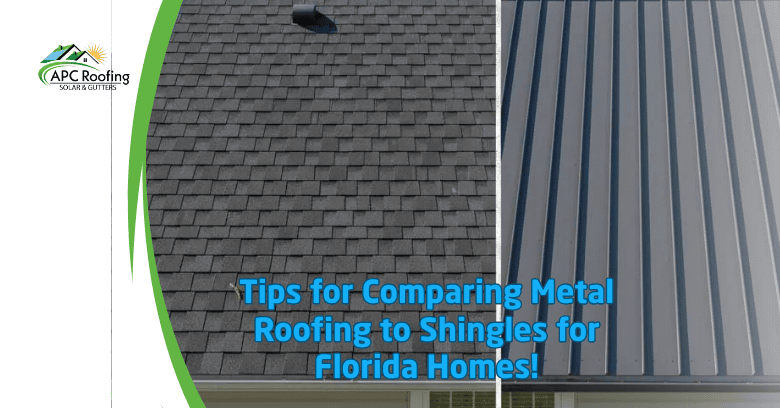
A three-tab shingle is one thin layer with two slots cut into its lower half, and a slope covered this way shows even, repeating rows. An architectural product bonds a contoured upper strip to a solid backer, and the staggered outline throws shadows that suggest depth.
A laminated bundle holds considerably more asphalt than a strip bundle, and listed wind classes are generally higher. Nailing on a two-ply shingle aims at the strip where the plies are joined, and the manufacturer's markings set the target.
Uses for the Flat Style: Sensible Settings
A detached garage, a shed or a porch often suits three-tab well, while a house already wearing that type can be matched. Selection has shrunk, since many brands have trimmed that style, and discontinued hues cannot be ordered at all.
Laminated shingles hide small dips in an older deck better, while single-ply rows show every ripple. Either style is laid over identical underlayment and metal details, and the shingle itself is the only part that changes.
Aging of the Top Coat: Clues at Ground Level
Some surplus grains rinse off a recently installed covering, and that is no cause for concern. A steady stream of grit from an aging covering shows the top layer is going, and the naked asphalt goes on to crack.
South- and west-facing planes bake the longest each afternoon, so bald patches tend to appear there sooner.
The Thermal Adhesive: Limits in Cold Months
Every shingle arrives with a sticky asphalt stripe, and on a hot day it softens and grips the row laid over it. Once the courses are stuck together, gusts struggle to lift the exposed edges, and nailing still carries the load year after year.
In the cold months at the colder end of our territory, sealing can take many weeks to happen, and a stiff wind can raise a loose tab before then. Manufacturers' instructions call for dabs of roofing cement in that situation, and a printed label spells out quantity and spacing.
Securing Each Course – Why Accuracy Counts
Every nail belongs inside a narrow stripe the manufacturer marks, where each shank pins the row below as well. A standard shingle gets four fasteners, while steep pitches and windy locations need six.
A nail driven high pins one layer instead of two, a head pounded too far breaks the mat, and a cocked shank raises a hump in the shingle overhead. Every wind rating on a wrapper presumes the pattern was met, while a bad compressor setting repeats itself on every shot.
The Wood Below: Types and Condition
The deck under asphalt shingles is usually plywood or OSB, since fasteners must bite into something continuous. Many older homes still have spaced boards left from a wood-shake era, so sheathing is laid across them before shingles.
Sections that are soft, delaminated or rotted get cut out and replaced during a tear-off, since a shank in crumbling fibers cannot hold. Installers leave a slim gap where sheets meet, as boards butted tightly lift into ridges when they absorb moisture.
Old Paper, New Fabric – Types in Use
Building rules in most places require a water-resistant membrane over the deck, and its runs are lapped so water flows over each joint. Synthetic sheet has largely replaced asphalt-saturated felt, as the modern fabric is tougher and does not ripple after rain.
A membrane catches wind-driven rain that slips under the shingles, but it is meant for occasional water, not months of open sky.
Membrane at the Eaves: Seasonal Detail
At the colder end of our territory, heat leaking from the house thaws the snow on the upper slope, and meltwater hardens again once it reaches the cold rim. Water pooling behind that buildup can back up under the shingles, and regular underlayment offers no seal where nails penetrate.
A self-sealing ice barrier goes down along the bottom of each slope where winters freeze, and it continues until it passes the wall line inside the house. Everywhere in our territory, it is also a regular choice for valleys and around chimneys, because runoff slows and gathers at those spots.
Perimeter Flashing: Sequence Matters
Every eave and rake gets a formed strip of metal, and the lip carries water clear of the fascia. The underlayment covers the lower flashing, but on the gable sides the order reverses.
Codes across much of the country list edge metal as required on every perimeter of the covering, as water tends to wrap under an unprotected rim.
Groundwork at the Eave – Rakes Too
The first exposed course rests on a dedicated starter strip, and its glue stripe sits at the extreme outer margin. A regular field piece simply turned around leaves its adhesive well back from the gutter, so the lowest run relies entirely on its nails.
A starter run along each rake is common practice under current instructions, since uplift is not limited to the eaves.
The Low Seams: Choosing a Style
Open valleys expose a painted or galvanized liner along the fold, while the closed-cut type runs shingles from one side across and trims the other side along a chalk line. Woven work alternates rows from the two planes and suits three-tab, though dimensional shingles rarely take to it because of their bulk.
Fasteners stay out of the center of the channel, and a waterproof underlayment is laid beneath along the full run. Debris packed into a valley stays damp long after rain ends, so runoff may be forced beneath the cut side.
Tie-Ins to the Structure – Chimney Aprons
A separate step flashing is tucked under each course where the covering meets a wall, and a counterflashing or trim board covers the raised leg. Where the eave stops against the house, a kickout diverter goes in, since water left alone tracks into the sheathing.
The flashing around a chimney is an apron below, steps on each side and counterflashing embedded in mortar, and a large stack gets a saddle that sheds water both ways.
Roof Penetrations: Wear Over Time
A pipe boot combines a flat metal or plastic base with a rubber collar around the pipe, and sunlight gradually hardens that seal until it splits. Courses above lap over the flange's top edge, and water running down the slope passes over the exposed lower part.
Collars frequently need attention while the rest of the covering is healthy, so a full reshingling normally includes fresh boots.
Along the Peak – Final Courses
Cap shingles straddle the ridge and run down every hip, and on a laminated covering the manufacturer supplies a thicker matching version. Tabs cut from single-layer shingles make a thinner substitute, and at the colder end of our territory a freeze can open splits along the bend.
Many peaks hide an exhaust vent under the cap row, and nail length is chosen to pass that gap and grip the boards.
Circulation Upstairs – Mixed Systems
Soffit vents are where outdoor air is supposed to enter, and a ridge exhaust lets it out. Batts pushed hard against the sheathing at the wall line can block movement, and rafter baffles preserve a clear route.
An attic holding in heat warms the deck from underneath, and moisture from the living areas lingers up there. Across the colder end of our territory, a crust of frost builds on the nail points, and the water runs down as the day goes on. Mixing a ridge vent with gable louvers or a powered fan can short-circuit the flow, because suction then draws from the nearest opening instead of the soffits.
Around the Map: Algae and Hard Winters
Our markets take in mountain snow in one place and tropical heat in another, so the forces working on a shingle change from city to city. At the coastal end of our territory, big storms off the ocean send steady wind across a house, and makers publish a tougher fastening pattern for that exposure. Months of intense sunshine slowly bake the binder, and moist air lets algae take hold.
At the colder end of our territory, freeze and thaw cycles pry at every small crack, while snow cover keeps the eaves cold for weeks at a time.
Ice From the Sky: Lab Testing
At the colder end of our territory, hail falls in many storm seasons, and impact-resistant lines exist for exactly that. A strike scatters the grit from a small round area, and a heavy blow may fracture the fiberglass below.
Impact ratings come from a laboratory test that drops steel balls on the shingle, and a line that passes at the top level holds up better. Rubber-modified asphalt is common in these designs, which lets the shingle flex instead of shattering.
Wind on Asphalt: Folded Tabs
Force builds most at the eaves, the rakes and each corner, and a loose shingle rises and slaps back down. A tab folded back far enough creases along its width, and the mat never regains its strength along that line. Shingles harmed that way come out and new ones go in, while a loose but unharmed one takes a few dabs of cement.
Where a tab has blown away, the underlayment beneath lies open to the sun, and ultraviolet rays wear it down fast.
Growth on the Surface: Cause and Care
Blackish discoloration in long vertical bands is algae, and the microbes draw on limestone in the coating. At the humid end of our territory, faces under trees and out of the sun collect it soonest, but the streaking by itself is largely about looks.
Moss behaves differently, soaking up rain like a sponge, and it works under the edges and raises them. Power washing tears granules loose as it goes, so a mild product rinsed on softly is the better choice. Many makers offer algae-resistant lines with copper in the coating, while rain running over a zinc band near the ridge holds the stain back.
Color on the Slope: Looks and Lots
Darker shingles get noticeably hotter under a midday sun, while light ones reflect much of the light skyward. Some product lines use specially coated granules that turn back more radiation, and a tested reflectance figure goes with them.
Shingles from separate production runs may not match exactly, so maker directions say to draw from more than one bundle at a time. Blends that combine many colors mask small mismatches, whereas single-shade shingles make them easier to spot.
Getting Up There: A Safer View
On a hot afternoon the coating turns soft, so treads rub the stone off in patches. At the colder end of our territory, frozen tabs split beneath a person's weight, and a skin of frost leaves the pitch slick.
The ground is the right place for anyone without roofing gear, since binoculars reveal nearly everything worth seeing.
Covering What Is There: The Deck Question
Local regulations commonly accept an overlay over an old roof, provided there is only one and nothing beneath is rotted. Leaving the first layer on keeps the decking covered the whole time, and weak spots stay just as they were.
Irregularities beneath carry up into the finished roof, and flashing past its prime is usually kept. Stacking one covering on another adds mass that the framing must bear, while the fasteners need more length to bite into the boards.
Early Warnings: A Short List
- Mineral grains build up in the gutter troughs, and the drifts get deeper each season.
- Tabs stand up along one edge, and wind has pried the adhesive apart.
- Corners turn up like an old leaf, since age and heat have stiffened the material.
- Straight breaks run through a few pieces, and water can reach the mat through them.
- Dark, smooth patches appear on the surface, because the granules there are gone.
- A pipe boot has gaps between its collar and the pipe, and drips may reach the ceiling below.
- Counterflashing at a chimney has worked out of its joint, which lets wind-driven rain in behind it.
- A water mark appears near a light fixture or a closet, while the opening outside can be several feet off.
How APC Roofing Works on 3-Tab Shingle Roofing in Orlando Florida – Plain and Careful
An inspection starts by walking each slope in turn, and each valley, vent, flashing and edge is looked at closely. From inside, the attic is searched for water stains and pinholes of light, since the underside of the deck keeps the marks of any old leak.
Any problem is photographed, and damage is measured where size matters. The findings are written up in plain language, with a reason beside every recommendation. Small faults are labeled as small, while a spent covering is named for what it is. The choice is the owner's, be it a repair, a replacement or no work yet.
3-Tab Shingle Roofing Around Orlando Florida – Help From People Who Know the Details
Call us at 407-270-1129 to have someone come out.
Mending or Starting Over: Knowing the Limit
Changing a boot, resealing a flashing or swapping a few torn tabs is everyday repair work, while everything else on the slope remains. Fresh shingles stand out against faded neighbors at first, and that earlier shade may simply not exist anymore.
On a worn covering, tabs are brittle and crack when lifted to reach the nails, so the pieces beside the work may need to come out too. When curling edges and bald spots cover most slopes, replacement makes more sense than more patching.
Life Expectancy: What Moves the Number
A three-tab product commonly gives around fifteen to twenty years, while laminated lines often reach close to thirty. Attic airflow, sun exposure and the quality of the nailing move that figure, while one bad storm can end the run early.
Checking the flashings and pipe seals now and then is sensible upkeep, because small faults caught in time never reach the deck.
If you are planning 3-Tab Shingle Roofing in Orlando Florida, reach APC Roofing at 407-270-1129. The covering is inspected from the gutters to the ridge, and the findings reach you in writing so the decision stays yours.
Verified

Verified
Verified
Verified
Verified