Hoping to find Commercial Roofing Installation in Independence Missouri?
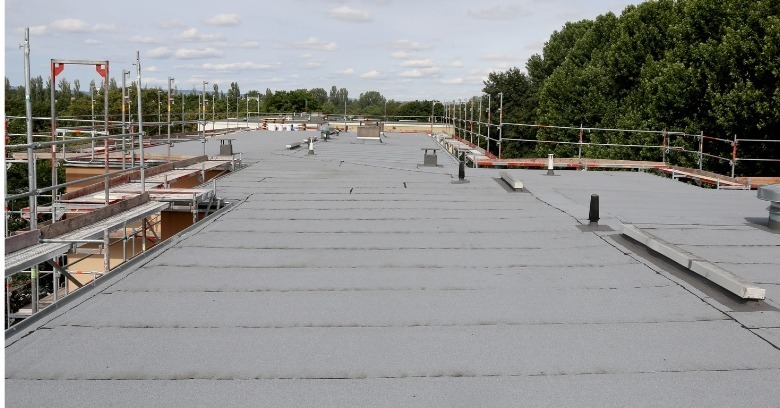
APC Roofing installs and mends membrane and metal coverings on business buildings, including the drains, curbs and flashings.
Call 913-398-5020 and a roofer will go up top and check every part.
Above a Shop or Office – an Overview
Staff, stock and machinery sit beneath the membrane, and dripping water can idle a conveyor or spoil a pallet of product. A big footprint is covered at a gentle grade, so drainage and wind resistance are worked out by calculation.
Package units, vent stacks and dishes are bolted in place above the ceiling, and every pipe, duct or support must have a sealed opening. How the building is used guides the specification, because a bakery and a document archive ask for different things.
Kinds of Low-Slope Covering: Options on the Market
One flexible layer of TPO, PVC or EPDM is what single-ply describes, modified bitumen is asphalt with polymers added, supplied in rolls, and built-up roofing is felt sealed with hot tar several plies deep. Thermoplastic overlaps are heat-welded into a continuous piece, whereas rubber splices rely on primer and adhesive tape.
Fryer exhaust coats the area around a restaurant's fans, and oily buildup degrades asphalt and EPDM coverings, so the stretch nearby is often PVC. A built-up roof topped with gravel is heavy and long-wearing, since the aggregate protects the felts from ultraviolet light.
Steel Over a Warehouse – Details Worth Knowing
On an exposed-fastener system, screws pass straight through the face of each sheet, and the threads bite into the purlins beneath. The neoprene washer at each head dries out under years of sunlight, and daily expansion and contraction slowly back the fasteners out.
A standing-seam system uses clips hidden inside raised ribs, and the hardware lets each pan travel. Rust tends to appear at side laps and cut edges, and a coating applied while the steel is sound can slow the spread.
Deck Types: Grip and Strength
Attachment methods are limited by what the original builders put in, and the framing normally stays through every reroof. Corrugated steel gives screws a firm bite, concrete calls for adhesive or drilled anchors, and wood planking takes ring-shank nails or plates.
Old, slow leaks corrode patches of a metal deck, and a weak area gets a new panel before anything goes on top. Where a drop ceiling lifts out, the bottom of the structure is examined, and exploratory openings from above reveal the remainder.
Attachment Methods – Pros and Cons
A fastened install uses plates and screws in the overlaps, adhered work is stuck down across the full surface, and ballasted sheets lie loose under stone or pavers. Deck type, building height and wind exposure point to the right method, and an engineer confirms the framing can carry any added weight.
Between the plates, a fastened sheet balloons in stiff gusts, whereas glue keeps a sheet calm only over a dry, clean base. Inspecting a ballasted system takes time, as every seam remains hidden until the stone or pavers are shifted.
Wind Across a Wide Roof – a Matter of Engineering
Suction peaks at the corners, since air accelerates on rolling over the perimeter. Along the sides, a narrower band sees a little less, and the interior bears a light load.
Attachment rows tighten on the approach to corners and edges, and published wind tables fix the spacing for each height. An outer angle with too few anchors allows the sheet to lift, and pressure underneath can strip a wide section.
Rigid Foam: More Than Warmth
Polyiso sheets are laid across the deck with joints staggered, and a thin, hard cover board is often added last. Insulation keeps conditioned temperatures indoors, and tapered units can slope a dead-flat deck to the outlets.
Wet polyiso loses much of the R-value, and the heavy mass adds weight and rusts a steel deck. An infrared scan at dusk, backed by cores, outlines the affected zone, and nothing ruined is left under a new covering.
Where Runoff Exits – Parts of the System
A metal strainer bolts over each interior opening, and the bars catch bags, leaves and gravel before the pipe. A grate packed with sludge chokes the flow, so a shallow lake forms across the low area.
A raised overflow waits above each primary drain, and a stream from the upper spout shows the ordinary route has stopped. Ponding piles extra weight onto joists sized for far less, and a wet patch that stays two days reveals a dip or a packed strainer.
Following Water Back to the Entry Point – No Guesswork
A soggy tile shows the spot where moisture emerged below, but the fault on the surface can lie a long way off. Steel decking guides runoff down the corrugations, and joints between foam panels open more paths.
A roofer probes the laps, curbs and outlets upslope of the stained area, and an electronic scan can pinpoint a hidden leak. Repairs aimed at the spot directly over the drip tend to miss, and the next downpour sends water through again.
Cabinets and Condensate: Keeping Water Out
Every heavy machine rests on a curb built up from the deck, and base flashing climbs the sides under a metal cap. The corners are the fussiest detail up there, and a small gap lets wind-driven rain into the structure.
A replacement condenser frequently arrives on an adapter curb nobody flashes, and drips show up indoors within weeks. Condensate discharged straight onto the covering discolors and softens the surface, so the flow should be carried to a drain.
Penetrations Through the Field: Handling Each Type
A round plumbing stack gets a molded boot clamped at the top, while awkward profiles are boxed in a pitch pocket and packed with filler. The compound hardens, shrinks and separates at the edges, and adding fresh material is ordinary maintenance.
Gas lines and conduit are meant to float on movable supports, since every screw driven through the sheet is a future leak. A square of sacrificial material under each foot spreads the pressure, and the buffer takes the wear as everything expands and shifts.
Glazing and Access Points – Service Notes
Sunlight slowly turns acrylic bubbles dull and fragile, and fractures tend to start at the fastener holes. Rain slips past a dried gasket or an open frame corner, and the drip is often charged to the covering.
The access hatch is lifted on every service visit, and hinges, springs and weatherstrip wear from constant opening. Automatic smoke vents are built to burst open during a fire, so flashing and materials stay clear of the swing path.
Masonry Above the Roofline: Staying Dry
Base flashing carries the membrane up the inside face, a termination bar grips the upper end, and counterflashing tucked into a reglet covers the fastened line. A coping cap spans the crest to push rain aside, yet a gap between sections funnels runoff downward.
Brick and block that have weathered let water migrate indoors, and the resulting mark resembles a roofing defect. A proper look takes in the coping, the flashings and the wall along with the sheet, and open mortar joints are repointed instead of caulked.
Fascia Metal at the Outer Edge – Parts and Purpose
A cleat screwed to the nailer catches the folded hem of the flange, and a strip of membrane seals the joint on top. Tested wind ratings decide which profile suits a given height, and an undersized section flexes until the metal pulls away.
Gutters along a long eave take a huge volume in a storm, so hanger spacing and outlet size follow the flow. Dented or lifting trim counts as a repair item, since securing the metal now keeps the sheet from tearing.
Service Visits and the Membrane: Living With Guests
Electricians, cable installers and HVAC crews all make regular trips up, so a scuffed trail builds along the usual line. An abandoned screw gets forced through the sheet by a passing boot, and an access panel set down on a corner slices a gash.
Walkway pads outline a lane from the hatch to each unit, and wear ends up on material built for foot traffic. Managers can require contractors to keep off the unprotected sheet, and cut-offs and fasteners go down with the worker who carried up the parts.
Upkeep Through the Year: What Gets Done
A commercial system benefits from a walk-through twice annually, plus a further check after a storm with high wind. Good upkeep empties drain baskets of leaves and litter, any open lap is found with a probe, and brittle sealant gets marked for replacement.
Preparing for the stormy months means close scrutiny of outlets and perimeter metal, and a follow-up hunts for whatever a harsh stretch of weather pulled apart. Each small defect found is logged with the location on a plan, and repairs can be grouped and timed sensibly.
Documenting a Covering: Knowledge That Lasts
A clear drawing pins down the position of each unit, drain and hatch, and a written cross-section lists every layer from the deck up. Every repair is entered with the date and photos, and moisture readings are added as taken.
Countless older buildings reach new owners with no history attached, and every crew works out the layers again. Roof records belong with the building, not with whoever did the work, and a copy passes to the next manager or buyer.
Fix, Refresh or Rebuild: What Tips the Balance
Where the sheet is healthy apart from isolated defects, patching is enough, while an aged but dry surface can take a liquid-applied system. Extensive saturated boards make the job a replacement, and so do seams that have turned brittle everywhere, though age on paper proves nothing.
Pressure washing and repairs have to precede the coating, and material below that holds water never dries out. Swapping only the ruined sections is sometimes a sensible middle course, where the surrounding membrane still has life left.
Reroof Paths – the Rules and the Reasons
A recover puts a fresh membrane over the current roof, and a separation board is laid in between. An overlay is allowed by code over no more than a single existing covering, as long as the insulation below is dry.
A tear-off strips everything down to the structure, so rusted or soft decking gets fixed in the open. A tapered system can be designed to empty the low spots, and crickets between drains split the runoff.
Signs Worth Reporting: What to Look Into
- Rain gushing out of the high overflow, which betrays a choked everyday outlet.
- A tan mark on acoustic tile that keeps growing, which reveals the foam above is getting soaked.
- White salt deposits across the parapet face, which can signal water entering the masonry.
- A gravel stop that moves when a gust hits, which can set up a blow-off.
- Standing water in the same place long after a downpour, which can indicate a settled structure or a fouled drain.
- A skylight bubble with hairline fractures, which may give way under a misstep.
- Rust spots spreading on the underside of a steel deck, which points to an entry somewhere on the membrane.
- A downspout that backs up in heavy rain, which can soak the wall and the ground below.
How APC Roofing Works on Commercial Roofing Installation in Independence Missouri – Our Sequence
We look first at the drains, scuppers and overflows, and next we go along each lap, curb and edge. A leak brings a moisture survey of the insulation, because saturation below changes the answer.
A written report, photos and a sketch record what we found, and each problem is labeled with a location. The outcome we propose is a repair, a coating or a replacement, and the reasoning is laid out for you to question.
Commercial Roofing Installation Around Independence Missouri: What Needs Doing Up Top
Reach us at 913-398-5020 and we will fix a time to see the building.
Working Above Occupants – Clear Communication
Drilling a steel deck sounds like thunder to everyone below, and glue fumes can travel down through open intakes. Noisy tasks are scheduled with the manager's input, and vents near the work can be shut while the cement cures.
A crane or chute takes stripped material to a bin, and stock under the open area can be covered over. Solvent adhesives carry a strong smell that water-based products lack, and the gentle option fits a store that stays open.
Sequencing a Big Replacement – Protecting the Interior
Old layers come off only in amounts that can be closed up by evening, and each bare part gets fresh boards before more is taken up. A temporary closure protects the joint between finished and unfinished portions, and the patch comes out once progress picks up.
The forecast sets how much covering comes off, and a chance of showers keeps the opening small. Bare foam hit by a downpour absorbs a great deal of water, and leaks can then reach stock and staff below.
Regional Conditions – Market by Market
At the colder end of our territory, hail and snow load both count, and denser cover boards with verified beam capacity follow. Across all the towns we serve, UV and high temperatures age a membrane, so a bright, reflective finish reduces solar gain.
The coastal end of our territory demands fastening designed around hurricane gusts, and heavy tropical rain calls for extra overflows. Low temperatures slow or stop many adhesives from curing, while hot-air welding copes with cool days but not with showers.
Keeping People Safe Overhead: Practical Precautions
A perimeter without a tall parapet leaves an open drop, and anyone near the edge works inside warning lines or clipped to anchors. Plastic skylights break under someone who stumbles onto the dome, and fixed screens rule out a plunge into the space below.
Permanent anchors help everyone who services the units, and a gated ladder hatch adds another safeguard. Any missing guard is noted in our findings, as a single-story drop can still cause grave harm.
For help with Commercial Roofing Installation in Independence Missouri, reach APC Roofing at 913-398-5020. A roofer will walk the membrane, the drains and the perimeter, and written findings follow, with the choice left to you.
Verified

Verified
Verified
Verified
Verified