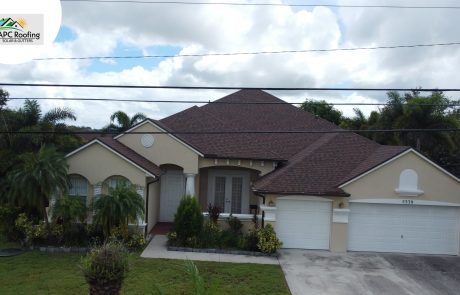
Trying to Find Roof Repair for a House in Lee's Summit Missouri?
APC Roofing puts a stop to wet patches in the attic and tracks down the opening behind the water.
Call us at 913-398-5020 and a roofer will come out to the house.
Where Leaks Come From: Following the Trail
The plain middle of a sloped roof is seldom where rain gets in, because the laps all face downhill. Trouble gathers wherever something breaks the pattern, at the pipes, the chimney, the valleys and the walls.
The wet patch indoors rarely lines up with the damage above, because the trickle clings to rafters and sheathing before falling. Measuring from inside without following the track leads a repair astray, so the trouble returns with the next heavy rain.
Walls That Rise From the Roof: Trouble Spots
One bent piece of flashing is slid under each row in turn; a second strip above covers the upper edges. Once the joint under the trim opens, the leak shows up inside at the wall line.
The durable answer is replacement flashing, installed piece by piece, so a strip of shingles comes up and goes back down. A bead of sealant across the opening is a stopgap, as sun and rain break down a surface seal within a few seasons.
Pipe Boots: Small Part, Damp Ceiling
Every drain vent that pokes through is closed around by a neoprene gasket on a plate, and sunshine slowly stiffens the material. Eventually a crack forms right around the pipe, letting runoff trickle down into the house.
The remedy is a fresh unit, fed in beneath the courses on the uphill side, while a rusted metal plate means the entire thing comes out. A heavier-duty boot is available for the same opening, when the surrounding roof is far from worn.
Valley Trouble: Wear and Debris
The fold where one plane meets another funnels the drainage from each, and a heavy shower brings a torrent through. Shingles laid in a valley lose grit well ahead of the field, and an unprotected install then fails as soon as the top layer goes.
A mat of leaves settles into the groove, which holds water against the overlaps. The repair for a worn-out valley is a full rebuild, liner and all, since a smear of mastic washes out under heavy flow.
Nails That Work Loose – Pulling, Not Hammering
Plywood sheathing expands and contracts as humidity comes and goes, and that movement nudges up whatever holds the shingles down. A climbing nail head can punch through the shingle above, which can leave a pinhole for the next storm.
Pounding a raised fastener flush is wasted effort, since the sheathing no longer clamps onto the shank. A sound repair removes the nail, fills the hole and nails again into firm decking, and any punctured tab is changed too.
Corrugated and Ribbed Metal: What Gets Replaced
A lot of barn-style steel is held by screws through the top, with a neoprene washer under every cap keeping rain out. In time the little rings harden and shrink, while driving too shallow never pressed down far enough.
Every tired fastener is backed out and a replacement with a fresh gasket goes in, with a wider shank used wherever the old hole has grown. Every lap seam and trim piece on the same slope gets a look as well, since parts put in together wear at one rate.
Tabs the Wind Has Raised: Checking the Damage
Every course is held by nails and by an adhesive strip that sticks to the course below, but a violent squall can peel the lower edge free. Any tab flipped past upright ends up creased, and a sideways downpour finds the gap.
A course that simply came unstuck can be cemented down again by hand, but a ripped tab is exchanged for new. Where a whole tab is gone, the fasteners below sit open to the sky, and water runs straight in around the shanks.
The Ridge: Where Driven Rain Gets In
Apex shingles wrap tightly across the meeting of the slopes, so years of sun leave splits on top. Under any ridge vent lies a gap cut out of the decking, and the cap above does all the work of keeping weather out.
Fasteners that have backed out let a storm blow spray beneath the unit, so the framing right under the apex turns dark. The repair along the peak takes in the caps, the vent and the fastening at once, since leaving any part undone invites the same trouble.
Ice That Builds at the Edge: the Overhang Problem
At the colder end of our range, perfectly good roofing can still let meltwater through, as warmth rising through the ceiling thaws the snowpack from underneath. Down at the eave, beyond the rooms below, the trickle sets hard, and the ice thickens into a lip.
Above the obstruction, meltwater has nowhere to go, where the water seeps upward into the nail holes. The lasting cure lives in the attic, where insulation and airflow keep the deck cold, and a self-adhering membrane along the eaves limits the harm meanwhile.
Roofs Over Porches: the Wrong Covering
Plenty of houses have a section with almost no pitch, and the flat portion is often finished with the same asphalt as the main structure. Courses that overlap rely on water never sitting still, and idle water finds a way under.
A sound fix swaps in a roll membrane designed for near-level roofs, joined to the steeper part with a proper transition.
Reading the Wood Under the Roof: From Below to Above
Runoff under the deck leaves a tide line on the lumber, and the tint can still be seen months later. The upper tip of the stain sits nearest the gap in the covering, so a tape run to the peak and to an end wall locates the spot from the roof.
A wire or nail poked upward from inside shows exactly where to look, while rooms with no attic above are traced from the exterior. Flattened, damp batts reveal where the drops fall, and a layer in that state is replaced, not dried out.
Water in the Attic: Condensation Explained
Moisture spread uniformly over the boards has little to do with the covering, because showers, cooking and breathing all put vapor into the air that settles there. In our colder towns, frost on the nail ends comes about the same way, and the thaw brings water down like a leak.
Repairs up on the roof do not touch moisture from inside, since the remedy is ventilation plus exhaust fans that vent to the open air. We say plainly whether the wet wood came from rain or from the rooms, and the next step follows from the diagnosis.
Chimneys – Why Some Need a Mason
An apron covers the low face, while step flashing rises up either side; higher up, counterflashing let into the joints laps down over everything. A large chimney should have a cricket at the rear, which turns the flow aside around the stack.
If the builder never framed a water-shedding wedge, needles and standing water settle on the uphill face, and the upper corners give way in time. Old mortar allows rain to enter the chimney above the metal, and repointing then becomes part of the job.
Skylight Leaks: the High Side
Sealed double panes rarely admit rain; the surrounding metal is where water gets past. The head of the opening takes the whole stream from overhead, and twigs trap small puddles.
The metal can be replaced with the unit kept in position, except where the glass has fogged between the panes. Steam from a bathroom below can bead on the glazing and drip, which no roof work will stop.
The Lower Edge of a Roof – Hangers and Outlets
Moisture where the ceiling and an outer wall join is regularly a drainage issue, because a clogged or sagging trough pushes water behind the trim. A roof finished without edge flashing lets rain cling and roll under, which leaves the fascia and sheathing rotting.
Often a gutter only needs rehanging so the water drains steadily to the outlet, and a hanger screwed into solid wood stays put. Drip edge that stops short is a roofer's mistake, and the correction means metal along the full bottom of the roof.
Satellite Dish Brackets: Leaks Years Later
Solar lights, receivers and similar gear are usually screwed into the deck, and a smear of caulk is often all that keeps rain out. Over a few seasons the sealant shrinks and comes loose, and water then runs down each shaft into the attic.
Removing old hardware does nothing about the holes underneath, and grime and grit often hide the openings from view. The repair seals every penetration and lays new shingles over the spot, while gear that stays is reset on a flashed base.
A Spongy Deck – What Years of Drips Do
Persistent seepage keeps the substrate under the roofing wet, and the plies swell and pull apart. Walking the slope, a roofer feels the spot flex underfoot, while inside the attic the sheathing bows between the framing.
Crews cut the failed decking out to solid wood again, and matching sheets go in, nailed along each truss. Underlayment and shingles then go back on top, and the leak that caused the damage is fixed as well.
Plastic Over the Damage: Done Properly
A tarp over the opening keeps the house dry, though the fault underneath is untouched. A sheet that stays put is carried over the ridge and battened with wood strips, and a few bricks end up in the yard.
Nails run through the cover and the shingles beneath into the deck, and every hole is sealed during the permanent repair. A tarp kept in place for a season bakes what lies beneath, which wears out the tabs beneath.
Photographs and Notes: Seen at the Time
Once the new part is in place, the old damage is out of sight, while the part to blame can be as small as a single nail. Our photographs catch the opening and the worn seal before anything changes, and matching shots follow when the work is finished.
The homeowner receives all the images, and the record serves a buyer, an inspector or another roofer down the line. The report states in plain words which part gave out, together with each step of the repair.
Repair or Replace: What Tips the Balance
Where the shingles are healthy, a failed boot or flashing is dealt with as a separate job, because metal and rubber parts seldom outlast the courses. A new covering makes sense once granules are gone across the whole house, or when one opening follows another all over.
Fixing one leak on a tired roof can help for a while, although nothing about the remaining shingles improves. Our advice is plain, and so is the thinking, and you have the final word.
Blending a Repair – Discontinued Lines
A just-installed piece reads darker and crisper than the neighboring courses, since exposure has softened the tone of the field. The product line, the cut and the closest shade in production are chosen to fit, so the contrast eases within a few seasons.
A shingle the maker has dropped cannot be copied exactly, so either a near substitute goes in or the work runs to a natural break. The fit is judged properly only with a sample beside the existing courses, as a small chip misses the blend of granules in a full tab.
Signs Worth a Call: What to Watch For
- A brown ring on the drywall that gets larger each storm, however small the mark.
- A moldy odor in a closet under the eaves, which hangs around for days.
- Pinpoints of light in the sheathing, seen from the attic.
- Tide lines on the underside of the roof, below a single high point.
- Rubber at a pipe gone hard and broken, on the slope above a bathroom.
- Heavy grit piling up in the gutters, returning after every cleaning.
- A lifted, creased or missing tab, following a gusty storm.
- Open seams in the metal flashing, at a skylight or a dormer.
How APC Roofing Takes On Roof Repair in Lee's Summit Missouri – What We Do on Site
A visit begins up in the attic, and the highest wet mark there is matched to a spot on the slope. The part that failed is mended with the material that belongs there, with the same weak points across the house checked too.
The camera records the problem and the completed work, along with notes in plain words. If mending no longer makes sense, we say so outright, and what happens next is your decision.
Roof Repair Across Lee's Summit Missouri: Straight Answers and Sound Work
Call us at 913-398-5020 and describe the problem.
Rigging and Weather – Planning the Equipment
Plastic can be fastened down on a still-damp deck, though shingles and flashing go on only once the wood has dried. The glue line on each tab activates with heat, and in cool months a roofer seals each piece by hand.
A steep or tall house requires harnesses, anchors and planks, because a tumble off the roof is serious. Tabs softened by afternoon heat mar easily when walked on, and every scuff wears away some of the mineral surface.
Older Roofs – Small Jobs, Plain Talk
A tab that has spent many summers outdoors goes brittle, which means raising a course to reach the fasteners splits the shingle. Shingles ruined on the way in are added to the repair, and the patch can end up larger than the leak.
If the asphalt is past the point of handling, you are told up front, with photos showing what we mean. A modest fix on a tired roof is fair to ask for, so long as the fix is seen as a bridge, not a cure.
For Roof Repair in Lee's Summit Missouri, get in touch with APC Roofing at 913-398-5020. We find the opening and mend the failed part with the right material, with pictures of the problem and the result for you.
Verified

Verified
Verified
Verified
Verified