Weighing Shingle Roofing Anywhere in Orlando Florida?
APC Roofing re-covers slopes with laminated or flat strip products for homes of every age and size.
Call us at 407-270-1129 and a trained eye will check the details and report back.
How the Pieces Are Made: Plant to Pallet
A fiberglass mat gives each shingle its strength, and asphalt spread over the sheet stops water, and stone granules pressed into the upper face block sunlight.
Bundles that seem identical on the shelf can differ widely inside, and a heavier build generally adds years on a house. A display board reveals the shade and little else, while the maker's data sheet lists wind and impact ratings.
Choosing a Profile – Setting Them Apart
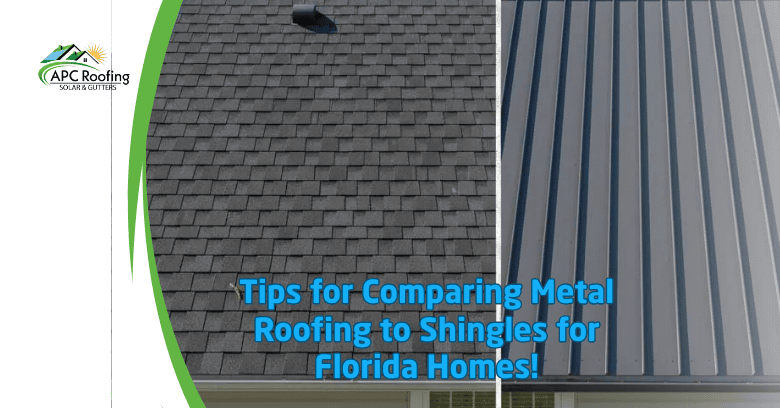
A three-tab product is a single-layer piece with twin cutouts at the exposed edge, so the surface shows neat uniform lines. An architectural shingle has an irregular top ply fused to a whole base, so the uneven profile casts shadows.
Thicker double-layer shingles weigh more across a slope, and published wind ratings are commonly higher as a result. Nails on a dimensional shingle go through the zone where the plies meet, and the manufacturer's markings set the target.
The Case for Strip Shingles: Sensible Settings
Three-tab commonly goes on a shed, a carport or a covered porch, and an addition can blend with an older covering of that type. Many manufacturers have narrowed their ranges of that style, so an exact replacement can be hard to find.
An architectural surface conceals small humps in an aging deck, while flat courses make any hollow obvious. Either style goes over the same underlayment and flashings, so the difference lives entirely in the top layer.
Aging of the Top Coat – Early and Late Stages
A freshly laid covering releases surplus grains during its opening months, and that is no cause for concern. Heavy grit at the downspouts of an older covering means the protective coat is thinning, and asphalt left bare hardens and fractures in the heat.
South- and west-facing planes bake the longest each afternoon, so the damage is usually heaviest on them.
The Factory Sealant Band – Cold-Weather Care
Glue is applied to every shingle at the plant as a narrow stripe, and a stretch of warm, sunny days softens it until the overlying row sticks. Once the courses are stuck together, gusts struggle to lift the exposed edges, and nailing still carries the load year after year.
At the colder end of our territory, shingles laid in late fall may not seal for weeks, so a windy day can fold back tabs that have not taken hold. The manufacturer's sheet calls for hand-applied cement, and each bundle label marks the right locations.
How Courses Are Attached: Height, Depth and Quantity
Nails land in a slim target stripe laid out by the manufacturer, where each shank pins the row below as well. The basic schedule calls for four fasteners on each shingle, and six go in where the slope is steep or the wind is strong.
A misplaced high nail leaves the lower course loose, an overdriven head cuts into the mat, and a crooked shank makes a bump that wears through the shingle above it. Published wind ratings assume the manufacturer's pattern was followed exactly, and a poorly adjusted pneumatic tool repeats its error across an entire plane.
The Structural Base – Replacing Weak Sections
The deck under asphalt shingles is usually plywood or OSB, since fasteners must bite into something continuous. Many older homes still have spaced boards left from a wood-shake era, and full sheathing is added on top before any shingles.
Sections that are soft, delaminated or rotted get cut out and replaced during a tear-off, because nails in weakened material back out over time. A small gap is left between neighboring panels, because wood swells in humid weather and buckles without room to move.
Underlayment Basics: Felt or Synthetic
Before any shingles go down, a water-resistant membrane is rolled over the deck, and its seams are lapped so rain crosses them without entering. Asphalt felt is less common now that synthetic sheet has taken hold, because the newer product weighs less, tears less easily and lies flatter.
Rain forced past a loose shingle is shed by the membrane below, but it is meant for occasional water, not months of open sky.
Peel-and-Stick Protection: Seasonal Detail
At the colder end of our territory, snow over heated rooms melts even on a sub-zero day, and meltwater goes solid again where the roof extends past the wall. Trapped water behind the blockage creeps higher beneath the courses, and regular underlayment offers no seal where nails penetrate.
Where cold winters bring ice dams, a sticky rubberized barrier is applied at the eaves, and it extends upslope beyond the point directly above the heated interior. Across every part of our service area, valleys and skylight curbs frequently get it too, since flow concentrates in such places.
Where the Deck Ends – A Code Item
Formed metal strips line the eaves and rakes of every slope, so rain falls free beyond the woodwork. Down low, the flashing is installed before the underlayment, and at the gable ends that sequence is reversed.
Codes across much of the country list edge metal as required on every perimeter of the covering, since rain creeps back onto the decking where nothing guards it.
The Lowest Row: Uplift Concerns
The first exposed course rests on a dedicated starter strip, so sealant lands exactly where the covering stops. A field piece set backward carries its adhesive uphill, out of reach, so the lowest run relies entirely on its nails.
The sloped gable edges frequently get starter strips too, since uplift is not limited to the eaves.
Drainage Between Planes: Construction Methods
Open valleys expose a painted or galvanized liner along the fold, while in the closed-cut type one side crosses over and the opposite side is trimmed neatly. Interlacing rows from each plane suits single-layer products, though dimensional shingles rarely take to it because of their bulk.
The middle of the trough is kept free of fasteners, and a sealed membrane is placed below as backup. Debris packed into a valley stays damp long after rain ends, so water starts finding a path under the sides.
Vertical Surfaces – Chimney Aprons
Along a sidewall, a bent L-shaped step flashing is woven in with each course, and a counterflashing or trim board covers the raised leg. The corner where the eave reaches the house takes a kickout, and skipping it sends water into the studs.
Around a chimney, step pieces line the sides, an apron covers the front and counterflashing is set into the masonry, and a large stack gets a saddle that sheds water both ways.
Roof Penetrations: Timing a Swap
A pipe boot combines a flat metal or plastic base with a rubber collar around the pipe, and the sealing ring stiffens and cracks as it weathers. The top portion of the flange goes under the uphill shingles, so runoff flows across the downhill side instead of under it.
Neoprene collars regularly fail well before the field shingles do, and new boots are standard whenever the shingles are replaced.
At the Summit – Final Courses
Cap shingles straddle the ridge and run down every hip, and architectural work uses a factory-made accessory. Pieces cut from strip shingles are much thinner, and in winter at the colder end of our territory the fold is prone to cracking.
An exhaust vent commonly sits under the ridge caps, and nail length is chosen to pass that gap and grip the boards.
Breathing Room Above the Ceiling: Common Problems
Outside air should come in through vents under the eaves, and it should leave high along the ridge. Insulation that spills into the narrow cavity over the walls can shut the passage, and foam or cardboard baffles hold a channel clear.
An attic holding in heat warms the deck from underneath, and it also holds moisture rising from the house. At the colder end of our territory, frost can form on the nail tips poking through overhead, and the melt drips down when the sun comes out. A powered fan or gable vents alongside a ridge vent can scramble the pattern, since the draft takes the quickest route rather than sweeping the whole space.
Around the Map: Wind, Sun and Winter
Our service area stretches from high plains to subtropical towns, and each setting wears on asphalt differently. At the coastal end of our territory, the large storm systems blow for hours, and product sheets set out an enhanced nailing method. Constant heat pushes the lighter oils out of the asphalt, and lasting humidity gives algae room to grow.
At the colder end of our territory, water that seeps into a crack freezes and widens it, and packed snow sits on the slopes for days.
Ice From the Sky: Lab Testing
At the colder end of our territory, big hail visits many neighborhoods, so shingles designed to resist impact are widely sold. A strike scatters the grit from a small round area, and a hard enough blow can crack the mat underneath.
An impact class is assigned after steel balls are dropped on samples in a lab, and a line that passes at the top level holds up better. Plenty of makers use a polymer-modified coating, which lets the shingle flex instead of shattering.
Blowing Weather: Folded Tabs
The border of a roof and its corners see the greatest upward force, and a shingle whose seal has let go starts to flap. A tab flipped over by a gust carries a scar across it afterward, and the mat never regains its strength along that line. A piece in that state is swapped out, while one that only lost its seal can be cemented back down.
An empty spot in the courses puts the underlayment in direct sun, and ultraviolet light breaks that layer down quickly.
Roof Growth: Shade and Damp
Blackish discoloration in long vertical bands is algae, which feeds on crushed limestone mixed into the product. At the humid end of our territory, shaded north-facing roof planes grow it fastest, though the color change is mainly cosmetic.
Moss matters more, since it keeps the courses damp, and its roots creep under the tabs and pry them up. High-pressure spraying rips the grit away with the growth, so a gentle rinse with a cleaner made for roofing is the safer route. Many makers offer algae-resistant lines with copper in the coating, while a strip of zinc at the ridge helps keep the stains from returning.
Color on the Slope – Blends and Batches
Darker shingles get noticeably hotter under a midday sun, and pale shingles stay cooler. Some product lines use specially coated granules that turn back more radiation, and a tested reflectance figure goes with them.
A pallet from one batch can look a touch off from another, so maker directions say to draw from more than one bundle at a time. Blends that combine many colors mask small mismatches, while a solid, even finish reveals them more readily.
Standing on a Slope: Care Underfoot
Midday sun softens the surface noticeably, so treads rub the stone off in patches. At the colder end of our territory, a course stiff with cold can break under weight, and a thin film of frost makes the slope a slide.
A homeowner is far safer staying on the ground, since a zoom lens on a phone catches a lot.
Covering What Is There – Hidden Trade-Offs
Local regulations commonly accept an overlay over an old roof, though not where two are already down or the sheathing is soft. Leaving the first layer on keeps the decking covered the whole time, so a spongy section just stays put.
Irregularities beneath carry up into the finished roof, while aging flashing frequently stays put. A second layer's load sits on framing chosen decades ago, while longer fasteners are needed to reach solid sheathing.
Clues to Notice – Worth a Closer Look
- Mineral grains build up in the gutter troughs, and the drifts get deeper each season.
- Tabs stand up along one edge, so wind has broken the bond.
- The lower margins cup into a shallow dish, which happens as the oils bake out.
- Splits open across the middle of a tab, and the layer below begins to soak up water.
- Dark, smooth patches appear on the surface, where the stone coating has worn off.
- The seal around a plumbing stack has cracked, so water works its way indoors.
- Flashing at a chimney has lifted off the brick, so a downpour can run in underneath.
- A damp patch shows up on the ceiling after heavy rain, and the source can lie well uphill of it.
APC Roofing and Shingle Roofing in Orlando Florida: Findings You Can Use
An inspection begins with a walk across each slope, and each valley, vent, flashing and edge is looked at closely. Inside the house, the attic is searched for stains and daylight, and darkened boards on the underside show past leaks.
Anything wrong is photographed, and damage is measured where size matters. A written summary lays out what was found, and each suggestion is explained. Small faults are labeled as small, and a worn-out covering is identified as such. The choice is the owner's, including the option of doing nothing for now.
Shingle Roofing Across Orlando Florida: Straight Answers From Up Top
Reach us at 407-270-1129 and describe what you are seeing.
Fix or Replace: Knowing the Limit
Trouble at a boot, a flashing or a few scattered tabs is normally dealt with by a repair, while the surrounding shingles are left alone. Fresh shingles stand out against faded neighbors at first, and the original product line may have been discontinued.
Brittle tabs on an older roof tear when lifted, and the damage around the work zone grows. Once wear like that reaches across the covering, a patch simply moves the problem along.
How Long Shingles Last – Early Endings
Three-tab work generally holds up for fifteen to twenty years, while laminated lines often reach close to thirty. The real number depends on sun, attic air movement and how the nails went in, and a single violent storm may finish a covering off early.
Boots, flashings and sealed joints are worth checking every few years, since spotting a fault quickly keeps the damage small.
For a roofer's view of Shingle Roofing in Orlando Florida, call APC Roofing at 407-270-1129. Every slope, edge and flashing gets a close look, and a written report leaves the choice with you.
Verified

Verified
Verified
Verified
Verified