You spotted a cracked tile after the last hailstorm, or a few broken pieces landed in the flower bed, and now you’re wondering how much trouble your roof is really in. Finding good tile roof repair in Denver can feel harder than it should. Plenty of roofers would rather tear the whole thing off than spend an afternoon swapping a few tiles, and you don’t know who to believe.
That’s a fair worry. A tile roof is a big investment, and you deserve a straight answer about what it needs before anyone starts pulling pieces off.
APC Roofing is a GAF Certified roofing contractor, licensed and insured, and our inspections and estimates are free. We work on clay and concrete tile, from a single slipped piece to a whole slope that needs relaying. Call 720-902-6940 and a roofer who knows tile will tell you what’s going on up there.
How a tile roof keeps water out
The tile isn’t actually what keeps your house dry. Clay and concrete tile shed most of the rain and take the beating from sun and hail, but the real waterproofing is the underlayment on the deck underneath.
That’s why one cracked tile doesn’t always mean a leak. If the underlayment below it is still sound, water that slips past the tile runs down the sheet and off the eave. The trouble starts when the underlayment is exposed or worn out. Once that layer fails, water reaches the wood deck, and it can travel a long way before it shows up as a stain on your ceiling. The stain and the actual leak often aren’t in the same spot.
What Denver weather does to a tile roof
Tile holds up well in a lot of climates. Colorado tests it in a few specific ways.
Hail
The Front Range gets hail most springs and summers. Small hail usually bounces off tile. Larger stones can crack or break pieces outright, and the damage is easy to miss from the ground because the cracks are often on the underside or hidden under the course above.
Freeze and thaw
Concrete tile soaks up more water than well-fired clay. When that water freezes overnight and thaws the next afternoon, over and over through a Denver winter, it can slowly flake the surface of the tile. Moss and lichen make it worse by keeping the overlaps damp.
Strong sun at altitude
Denver’s high-altitude sun is hard on the underlayment wherever a tile is missing. An exposed strip of underlayment can break down in a season or two, long before you’d see a leak inside.
Snow and ice at the eaves
Snow that melts and refreezes along the bottom edge can back water up under the lowest course of tile, especially if the gutters are packed with debris.
Common tile roof repairs we see in Denver
Most tile roof repair work falls into a handful of jobs:
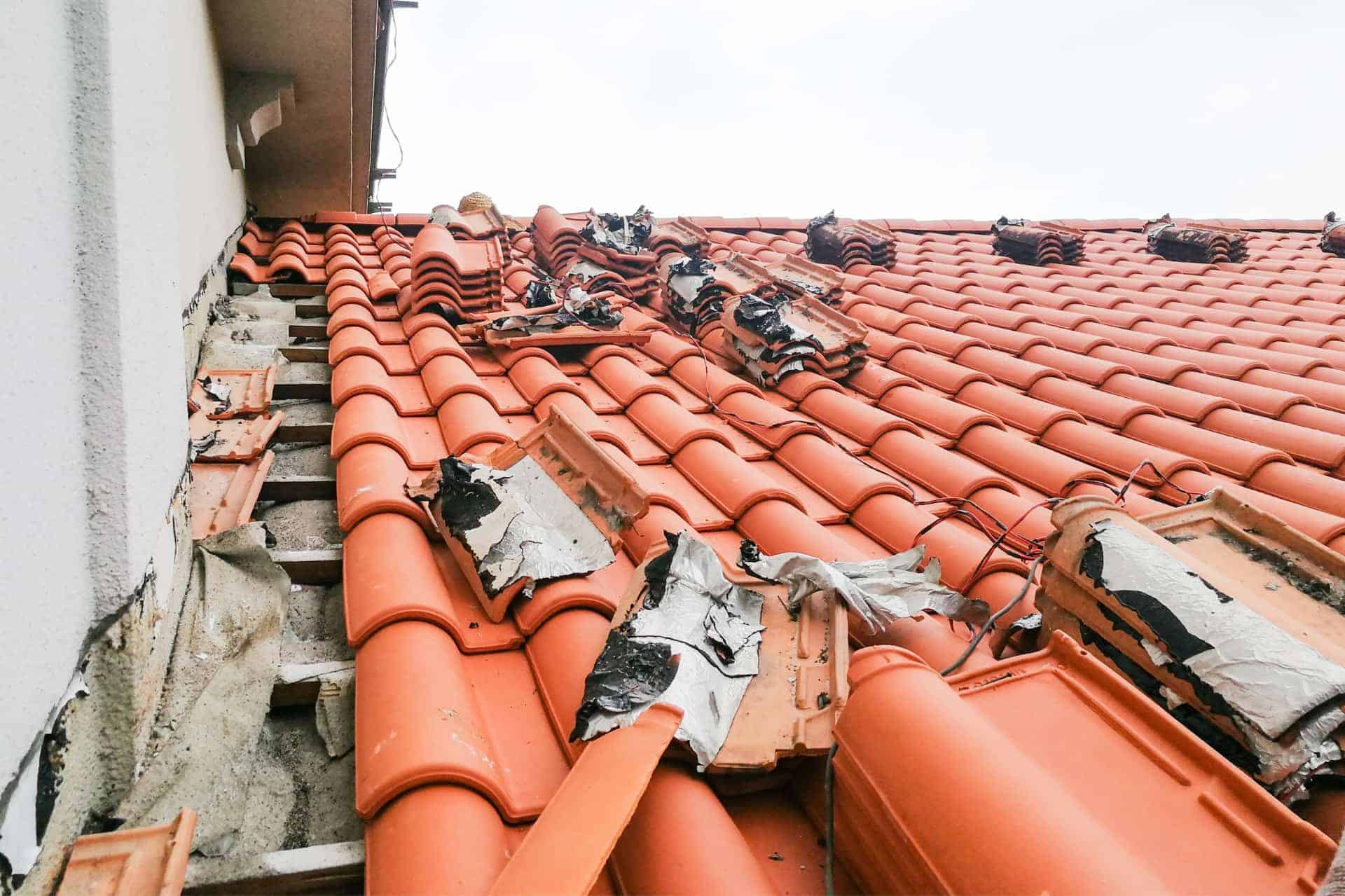
- Cracked or broken tiles from hail, a fallen branch or someone walking on the roof. We replace them and check the underlayment underneath while the spot is open.
- Slipped tiles, where the fastener or adhesive let go. The tile gets reset and secured the way the rest of the roof is fastened, whether that’s nails, screws, clips or foam.
- Ridge and hip problems. Older roofs often hold the ridge caps in mortar, which cracks and crumbles over the years. Loose caps get reset and sealed.
- Leaks where the roof meets a wall or chimney. Caulk smeared along a wall joint usually fails within a few seasons. The lasting fix is lifting the tile along that edge and rebuilding the flashing properly.
- Valley leaks, where pine needles and leaves pack the metal channel and push water sideways under the tile.
Matching matters, too. If your tile is still made, we can match it closely. If the style has been discontinued, salvaged tile or the nearest available match fills the gap, and a small difference in shade is normal. We’ll tell you up front so you’re not surprised.
Concrete tile roof repair vs. clay
Both get repaired the same basic way, but they age differently. Clay is fired in a kiln, the color runs all the way through, and it barely fades. Concrete tile is cast and cured, and on many brands the color only sits on the surface. That means a chipped concrete tile shows gray underneath, and a brand-new concrete tile will look brighter than its neighbors for a while before it weathers in.
Concrete tile roof repair in Colorado also means checking for freeze-thaw wear. A tile that’s flaking on the surface may still shed water for years, or it may be close to done. We’ll show you which.
For more on the material itself, see our page on concrete tile roofing in Denver.
Repair or relay? How we make the call
The condition of the underlayment decides it, not how the tile looks from the street.
If the damage is in one spot, like a few cracked tiles or a loose ridge cap, a repair is the right call and it’s what we’ll recommend. If the underlayment has worn out across a whole slope, the fix is a relay. The crew lifts the tile by hand and stacks it, replaces any soft decking, puts down new underlayment, then sets the good tile back in place. From the curb, your house looks the same. Underneath, the part that keeps water out starts fresh.
When a relay or full replacement does make sense, our tile roof installation team in Denver handles it start to finish. Either way, you decide what gets done and when. Holding off for now is a fair option too, and we’ll tell you if it is.
After a hailstorm
If hail just came through, start by getting the roof looked at before small cracks turn into exposed underlayment. Try not to walk on the tile yourself. Tile breaks easily underfoot, and a boot can crack pieces you’d never see.
We inspect every slope, photograph and measure the damage, and give you a written report. If you decide to file a claim, we’ll provide the estimate and work with your adjuster. You file your own claim and you pay your own deductible. Our hail damage roof repair page covers that process in more detail.
How it works with APC Roofing
- Book your free inspection. Call 720-902-6940 or request a free online estimate.
- Get a clear, honest assessment and estimate. You’ll see photos of what we found, and every recommended repair comes with the reason for it.
- Get the work done and the site cleaned up. The crew protects your landscaping, finishes the repair and hauls away the broken tile and debris.
If a bigger job needs to be spread out, we work with financing partners including Aqua Finance, Fortifi, Hearth and Home Run Finance.
Questions about tile roof repair in Denver
Can you replace just a few broken tiles?
Yes. Most tile roof repairs are small, local jobs. We’ll replace the broken pieces and check the underlayment underneath while it’s open.
Does a cracked tile mean my roof is leaking?
Not always. If the underlayment under it is in good shape, a cracked tile may not leak yet. It should still be replaced soon, because sun and weather wear out the exposed underlayment fast.
Will my insurance cover hail damage to tile?
That depends on your policy and what caused the damage. We’ll document what we find so you and your adjuster are working from the same facts. You file the claim and pay your deductible.
Do you charge for a tile roof inspection?
No. Inspections and estimates are free.
A tile roof you can stop worrying about
A cracked tile left alone for a year rarely stays a small problem. Sun breaks down the exposed underlayment, water reaches the deck, and a quick repair turns into rotted wood and a damaged ceiling. You don’t have to fix everything at once. It just helps to know where you stand.
The next hailstorm rolls through and you don’t have to wonder what it did. Your roof is sound, your house is dry and there’s no surprise bill waiting. Call 720-902-6940 to book your free inspection, or start with a free online estimate.