Searching for Roof Leak Repair Around Denver Colorado?
APC Roofing seals the gaps that let rain indoors, with the attention on flashing, boots and seams.
Reach us at 720-902-6940 to have a roofer come and look.
Sources of a Leak: Following the Trail
A pitched roof seldom fails in the unbroken middle of a slope, since gravity pulls the runoff over row after row. Entry points cluster where another material meets the covering, at chimneys, skylights, valleys and stacks.
The wet patch indoors rarely lines up with the damage above, because the trickle clings to rafters and sheathing before falling. Measuring from inside without following the track leads a repair astray, so the trouble returns with the next heavy rain.
Roof-to-Wall Junctions – What Hides Under the Trim
Step flashing is laced in with every course as the shingles climb, and a cap strip overhead keeps rain off the top edge. Once the joint under the trim opens, runoff slips behind the siding into the framing.
The durable answer is replacement flashing, installed piece by piece, with the neighboring shingles lifted and relaid. A coat of mastic on top is not the same thing, as sun and rain break down a surface seal within a few seasons.
Boots on Pipes: Small Part, Damp Ceiling
A drain stack is made watertight with a rubber collar and a flanged base, and exposure to the sky bakes the material hard. In time a split opens where the pipe comes through, and a bathroom ceiling is often where the water shows.
The remedy is a fresh unit, fed in beneath the courses on the uphill side, and a rusted base means the whole assembly goes. A heavier boot resists cracking much better, when the surrounding roof is far from worn.
Valley Repairs: Wear and Debris
The crease between neighboring planes collects the drainage from each, so a heavy storm makes a fast stream. Valley shingles go bare well before the rest, and without a liner below, the wear turns into a leak.
Seed pods and needles lodge in the channel, and runoff backs up under the edges of the courses. The repair for a worn-out valley is a full rebuild, liner and all, since nothing brushed on stands up to a torrent of rain.
Raised Nails – a Pinhole Leak
Plywood sheathing expands and contracts as humidity comes and goes, and that movement nudges up whatever holds the shingles down. A risen nail head tents the tab overhead, which can leave a pinhole for the next storm.
Sinking the loose metal home again gets undone, since the same loosened spot simply lets go again. The proper repair pulls the nail out, seals the hole and drives a new nail an inch away, plus a new shingle wherever a tab tore.
Metal on Shops and Porches: Where Water Gets Through
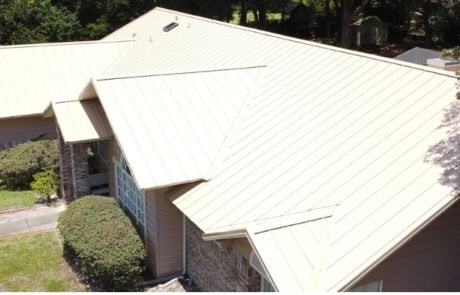
Some steel coverings are held down by screws driven through the surface, and a sealing washer beneath the head closes each opening. In time the little rings harden and shrink, and overdriving or a crooked angle speeds the failure.
The repair is a new screw carrying a fresh washer, and where the hole has widened, a thicker size is used. Seams and trim nearby deserve a close look as well, because the neighbors have weathered just as long.
Shingles After a Gale: What a Gust Leaves Behind
A course is nailed and then glued to the row below by a heat-activated strip, but a violent squall can peel the lower edge free. A flap that was folded over carries a crack along the bend, and the next blustery rain drives water inside.
Where the bond let go but the piece was not damaged, dabs of roofing cement restore the hold, while a torn tab is removed and matched. With a tab missing, the nails of the lower layer face the elements, and water runs straight in around the shanks.
The High Line of a Roof – the Slot Under the Vent
Shingles that finish the apex straddle a sharp bend, and time splits the top down the middle. A vented ridge has a slot sawn through the deck along the full ridge, and only the housing above keeps rain from dropping into the attic.
Missing end plugs leave an open door for wind-blown spray, so the framing right under the apex turns dark. Proper ridge work treats the caps and the vent housing as one job, because a single overlooked detail brings the leak back.
Ice Dams – Why the Attic Matters
In the snowier part of our territory, a roof with nothing wrong can still get wet, because house heat turns the bottom of the snow to liquid. Once past the outside wall, the dripping hardens again, until a frozen barrier lines the gutters.
Upslope of the blockage, standing melt spreads out, and lapped courses cannot keep out water that sits. What stops the freeze-thaw cycle for good is better insulation and ventilation overhead, and a sticky membrane under the edge rows guards against a bad season.
Sunroom and Porch Roofs – Membranes and Transitions
Many homes have one area that is close to level, though the flat portion tends to receive the same tabs as everything else. Overlapping shingles only stay watertight while runoff keeps going, but on a lazy grade the water hangs around and seeps sideways.
A sound fix swaps in a roll membrane designed for near-level roofs, joined to the steeper part with a proper transition.
Reading the Wood Under the Roof: Marks and Measurements
Seeping moisture darkens a line along the joists and decking, and weeks of dry weather do not fade the tint. The upper tip of the stain sits nearest the gap in the covering, and measuring from the ridge and a gable wall transfers the spot to the shingles outside.
A wire or nail poked upward from inside shows exactly where to look, while rooms with no attic above are traced from the exterior. Insulation that is soaked or matted marks where the drops keep landing, and material that wet has to be replaced rather than dried.
Indoor Weather Overhead: Where the Drops Come From
Dampness beading over the whole underside rarely starts outdoors, as the heat and steam of daily life collect where the air is coldest. In the colder markets we serve, frost furring the nail points comes about the same way, and the thaw brings water down like a leak.
A new covering would not stop the droplets at all, as the answer is moving the humid air out and keeping more from rising. We name the source as either the weather or the living space, and the next step follows from the diagnosis.
The Chimney Detail: Leaks at the Base
The front carries an apron, and the flanks carry stepped metal; higher up, counterflashing let into the joints laps down over everything. A large chimney should have a cricket at the rear, which parts the runoff and steers the water around.
If the builder never framed a water-shedding wedge, needles and standing water settle on the uphill face, and the upper corners are soon soaked. Crumbling mortar lets rain into the brick above the metal, so the fix sometimes needs a mason as well as a roofer.
Skylights and Skylight Wells: the High Side
The glazing is seldom where water enters; the flashing kit at the curb lets go instead. Everything flowing down the slope arrives at the top edge, and twigs trap small puddles.
New flashing goes on around the unit already there, unless the curb has rotted. Beads of vapor on the inner face can trickle down the well like a leak, and an exhaust fan or better ventilation cures the problem.
The Eave Line: the Foot of the Slope
Moisture where the ceiling and an outer wall join is regularly a drainage issue, because a full trough forces water under the bottom course. With no drip edge, rain curls under the shingles instead of dropping free, until the fascia and the deck above turn soft.
A gutter problem can be as simple to fix as a cleaning and a rehang, and screwed hangers hold far longer than the old spikes. Missing drip edge is an installation error, and the answer is one unbroken piece along the lower edge.
Disused Mounts – Sealing the Spot
Solar lights, receivers and similar gear are usually screwed into the deck, and a smear of caulk is often all that keeps rain out. Sun hardens the sealant until the bead cracks free, and water then runs down each shaft into the attic.
Taking the equipment down leaves the bolt holes open, and gaps that small are easy to overlook afterward. Every penetration gets sealant, and new shingles go over the area, with any kept item reinstalled on a flashing plate.
A Spongy Deck – When the Base Gives Way
A trickle that goes on unnoticed waterlogs the plywood below, and the plies swell and pull apart. On top, the area feels springy under a boot, while from inside the boards bow downward.
Weakened plywood is cut out until only solid wood remains around the opening, and matching sheets go in, nailed along each truss. Underlayment and shingles then go back on top, and whatever let the water in is repaired as part of the job.
A Cover on a Damaged Roof: What Holds in Wind
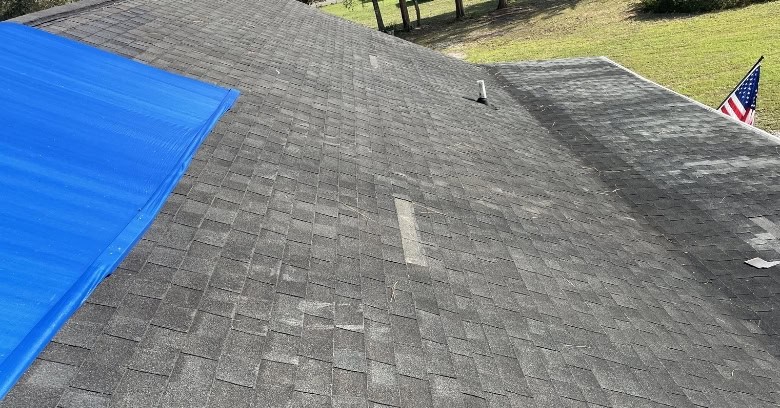
A heavy tarp keeps the interior dry, though the fault underneath is untouched. A poly sheet that rides out gusts is draped over the peak and pinned with battens, whereas rocks piled on the corners soon roll off.
Nails run through the cover and the shingles beneath into the deck, and every hole is sealed during the permanent repair. A cover forgotten through a summer cooks the surface below, so the proper work should not wait that long.
Documenting the Work: Kept for the Homeowner
After the replacement goes on, whatever gave way is gone from view, and the culprit is often a split no longer than a finger. Pictures capture the gap and the ruined component before anything comes off, and the finished job gets a separate set of shots.
The homeowner receives all the images, which helps when a buyer or an inspector asks about the roof. The written account says what broke, with the fix described in the same terms.
The Replacement Question: What Tips the Balance
A sound field with one faulty detail calls for mending that detail alone, because rubber and metal parts tend to age ahead of the asphalt. Replacement comes into the conversation when the tabs are brittle and bare on every slope, or when trouble keeps appearing in fresh spots.
A small repair on tired material can protect the rooms for now, although nothing about the remaining shingles improves. You hear which way we lean and why, and what happens next is up to you.
Blending a Repair: What Is Still Made
A brand-new tab shows up plainly among older courses, since exposure has softened the tone of the field. The product line, the cut and the closest shade in production are chosen to fit, and the gap closes as the new material weathers.
When a manufacturer retires a design, an identical replacement is gone, so either a near substitute goes in or the work runs to a natural break. The match is judged with a sample next to the existing shingles, since catalog pictures seldom print the tones true.
What a Homeowner Can Spot: Inside and From the Yard
- A discolored patch on a ceiling that widens in wet weather, most often near a wall or a chimney.
- A musty smell in an upstairs closet, even when nothing shows.
- Sky visible through the deck, at a pipe, a vent or a valley.
- Water trails on the framing, below a single high point.
- A cracked rubber collar at a vent pipe, often seen from the yard.
- Mineral grit at the bottom of a downspout, returning after every cleaning.
- A bare patch where a tab used to be, following a gusty storm.
- Rusted or gapped step flashing, where an addition joins the main structure.
How APC Roofing Approaches Roof Leak Repair in Denver Colorado – Our Method
The search starts inside, in the attic, and the top of any wet track there is measured to a place on the shingles. The broken component gets the correct repair, with the same weak points across the house checked too.
We photograph what we found and what we did, with a plain written summary alongside. If mending no longer makes sense, we say so outright, and what happens next is your decision.
Roof Leak Repair in Denver Colorado: a Roofer Who Finds the Way In
Dial 720-902-6940 to book a look at the damage.
Rigging and Weather: What Sealants Ask For
Tarping can happen on a wet day, but the real repair waits for everything to dry. Roofing cement and factory seal strips need warmth to grip, and in cool months a roofer seals each piece by hand.
A steep or tall house requires harnesses, anchors and planks, because a boot finds little purchase on a sharp incline. Sun-warmed tabs dent under the lightest weight, so careless steps leave bare patches.
A Roof Near the End: What a Repair Can Still Do
Weathered asphalt hardens and loses all give, which means raising a course to reach the fasteners splits the shingle. Whatever gets damaged along the way has to be swapped out too, which lets a modest fix spread.
We tell you in advance when the covering is too fragile to open safely, and the photographs show the reason. Mending one leak on an old roof is reasonable to keep the house dry, so long as the fix is seen as a bridge, not a cure.
For help with Roof Leak Repair in Denver Colorado, reach APC Roofing at 720-902-6940. We find the opening and mend the failed part with the right material, and you receive photographs of the problem and the fix.
« All Services in Denver Colorado