Another hail season, another insurance adjuster on your roof, and you’re starting to wonder if there’s a better option than shingles. Steel roofing in Denver keeps coming up, but it’s hard to tell what’s true and what’s sales talk. Will it dent? Is it loud? Is it worth what it costs up front?
Those are good questions, and you should get honest answers before you spend money on any roof. Steel is a great fit for some Denver homes and not the best one for others.
APC Roofing is a GAF Certified roofing contractor, licensed and insured. We install and repair steel roofs on homes, workshops and light commercial buildings in Denver, and inspections and estimates are free. Call 720-902-6940 to set up a visit, or see our full range of metal roofing in Denver.
Why Denver homeowners look at steel roofing
Denver’s weather is tough on a roof from several directions. The Front Range sits in one of the most active hail areas in the country, and a single storm can bruise asphalt shingles badly enough to need a new roof. Winds coming off the mountains can lift and tear shingles. Heavy spring snow piles weight on the roof, and freeze-thaw cycles work water into every crack. Then there’s the sun. At a mile high, UV is strong, and it ages roofing faster than at sea level.
Steel handles much of this well. It doesn’t crack or lose granules in hail. It sheds snow. It stands up to wind when it’s fastened correctly, and its baked-on finish holds up to strong sun. That’s why so many Denver homeowners ask about it after a bad storm year.
Steel has trade-offs too. It usually costs more up front than shingles. Large hail can still dent it, and repairs need someone who knows the exact panel system. You’ll get both sides before you decide.
Types of steel roofing
Most steel roofs in Denver fall into one of these styles:
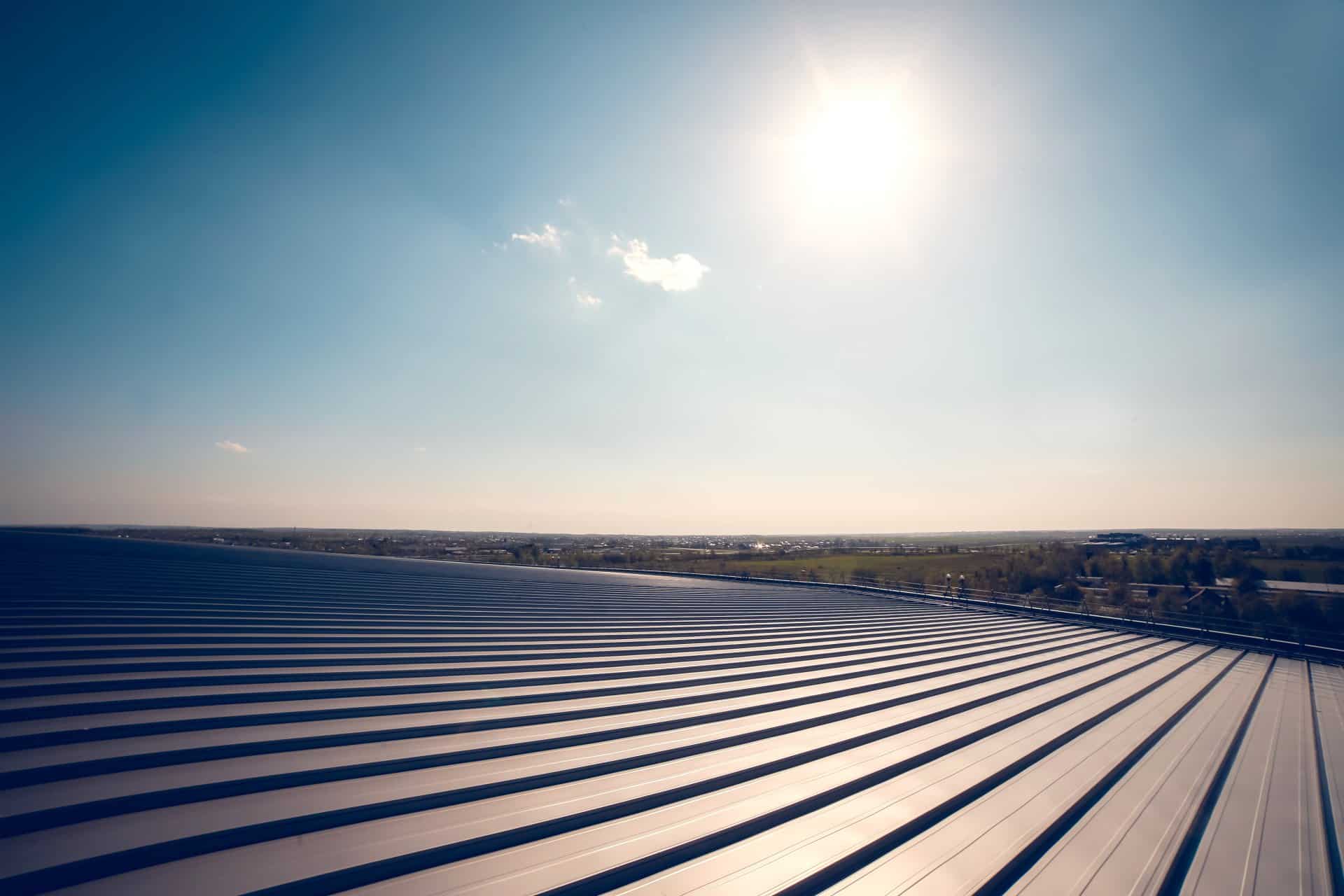
- Standing seam panels. Long panels with raised seams and hidden clips, so no screws are exposed. It’s a clean, modern look and a popular choice for homes. Our standing seam metal roofing in Denver page covers it in detail.
- Exposed-fastener panels. Ribbed or corrugated sheets screwed through the face. They’re common on shops, barns and outbuildings. The rubber washers under the screws age in the sun and eventually need replacing.
- Steel shingles and stone-coated steel. These are made to look like asphalt shingles, shake or tile. Stone-coated steel has a granular surface that hides small dents and looks right at home in older neighborhoods.
Steel, hail and dents
Steel doesn’t shatter or crack in hail the way some materials do, but it can dent. Many small dents are cosmetic: they change how the roof looks without letting water in. A dent becomes a problem when it cracks the paint at a crease or bends a seam open.
A few choices help steel stand up to hail. Thicker steel (a lower gauge number) resists dents better. Panels with ribs or striations hide small dents. Textured and stone-coated surfaces hide them even more. Many steel products are tested for impact resistance, so ask for the product’s impact rating when you compare options. If your roof already has storm damage, see our hail damage roof repair in Denver page.
Snow, ice and steel roofs
Snow slides off painted steel far more easily than off shingles. That’s mostly a good thing, since the weight doesn’t sit on the roof for weeks. But a whole slope of snow can let go at once. Over a door, a walkway, a deck or a gas meter, that can be dangerous.
Snow guards fix this. They hold the snow in place so it melts or slides off in small pieces. On standing seam roofs they clamp to the seams without drilling holes. Not every roof needs them, but the spots above entries and walkways usually do.
What separates a good steel roof from a bad one
The panel is only part of the story. These details decide whether a steel roof lasts:
- The finish. High-quality paint systems hold their color for years under Denver’s strong sun. Cheaper finishes fade and chalk faster.
- Room to move. Steel expands on a hot afternoon and shrinks on a freezing night, and Denver can swing a long way in a single day. Standing seam clips let panels slide. Rigid fastening wears screw holes into slots, and that’s where leaks start.
- Underlayment. A high-temperature synthetic underlayment goes under the panels, since metal gets hot in the sun.
- Flashing. Pipes, chimneys, walls and valleys need folded metal flashing. Caulk alone won’t last through years of freeze-thaw.
Why we tear off first
We tear the old roof off down to the deck before any steel goes on, so we can see and fix the wood first. Trapped moisture under steel has no way to dry out. The inspection checks the deck.
How it works with APC Roofing
- Book your free inspection. Call 720-902-6940 or request a free online estimate.
- Get a clear, honest assessment and estimate. You’ll see photos of your current roof. If steel fits, the written estimate names the panel style, gauge, finish and underlayment.
- Get your roof installed and your yard cleaned up. The crew protects your landscaping, installs the roof and cleans up before they go.
Financing is available through Aqua Finance, Fortifi, Hearth and Home Run Finance.
Questions about steel roofing in Denver
Will a steel roof dent in hail?
Large hail can dent steel, but it won’t crack or shatter it, and many small dents are only cosmetic. Thicker gauges, ribbed panels and stone-coated finishes resist and hide dents better.
Is a steel roof loud in a hailstorm or rain?
On a house with a solid deck, underlayment and attic insulation, a steel roof is usually not much louder than shingles. The loud ones tend to be on barns with no deck underneath.
Do you install steel shingles in Denver?
Yes. Steel shingles and stone-coated steel are among the metal roofing options we install, along with standing seam and exposed-fastener panels.
How do I choose a steel roofing contractor?
Ask for proof of license and insurance, ask what panel and gauge they’re quoting, and get the underlayment and flashing details in writing. Be careful with anyone who wants a signature the day after a storm.
A roof that’s ready for next hail season
Putting off a worn or storm-damaged roof rarely saves money. Water gets past bruised shingles and into the deck and insulation, and a repair becomes a bigger job. You don’t have to decide everything today. It helps to know your options.
When the next storm rolls across the Front Range, you can listen to it without bracing for another round of repairs. A sound roof, a dry house, no surprise bill. Call 720-902-6940 to book your free inspection, or start with our free online estimate.