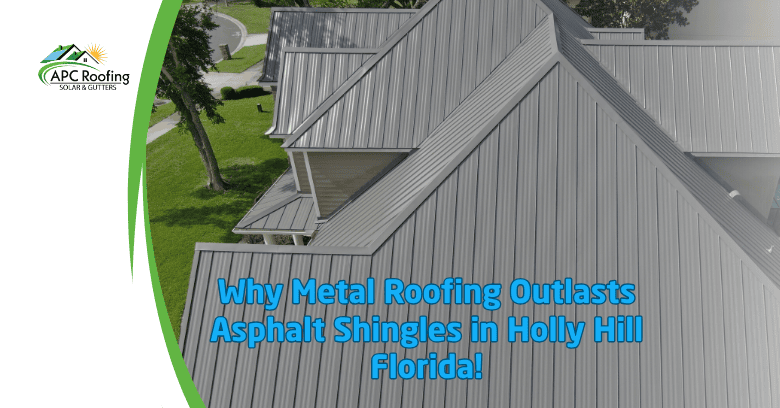
Considering Steel Roofing Within Clermont Florida?
APC Roofing installs panel coverings and mends worn sheet, from a pole barn to a family home.
Phone 407-270-1129 and a visit ends with a straight account of what was found.
Sorting Out Types: Clues From Below
A corrugated or ribbed covering is secured with screws set through the metal, while standing seam is clipped down beneath upright folds. Steel with a protective coating covers most houses that have metal, and aluminum or copper appears now and then.
From a driveway, lines of screw heads across the panels mark a through-fastened roof, while plain pans and tall ribs with nothing in sight are standing seam. Pole buildings, sheds and porches frequently get ribbed sheet, though a house can suit either.
The Cross-Section: Which Suits a Building
A corrugated sheet curves up and down in regular round waves, and ribbed panels pair tall square ribs with broad flat areas. One length rides over a neighbor at a side lap, and a printed fastening schedule sets where screws land.
Ribs make a stiffer panel that crosses longer spans, and corrugated remains popular for a traditional farm look. Rib height governs how much water a long slope can move, while a low pattern handles short runs like a porch or lean-to.
Fastener Hardware: Small Parts, Big Job
Each screw draws a panel snug against a rafter or purlin, and a washer under each head keeps rain out. Sun and temperature swings dry out neoprene over time, well ahead of the painted steel nearby.
Too much torque flattens a washer at once, and a fastener stopped short or angled leaves a gap for rain.
Hardware Swaps – Where Help Stops
On corrugated or ribbed sheet, every washer ages at one pace, and a whole-roof re-screw is routine over the years. Each original fastener is taken out, and a screw one size larger takes each place so threads grip solid material.
A re-screw stops drips around screw heads and draws lifting sheets back down, but corrosion, parted laps and bad flashing are left as found. New screws are matched to whatever framing lies beneath, with wood threads for lumber and drill points for steel, and color-matched tops blend in with a painted finish.
A Covering in Motion: Room to Travel
Steel lengthens on a hot afternoon and shortens on a cold night, and forty feet of panel shifts roughly a quarter inch or more, while aluminum goes about twice as far. Metal screwed down with no give wears each hole into an oval, and washers begin to leak.
Popping and clicking on a sunny morning is expansion at work, and a well-built roof takes no harm from some noise.
Beneath Raised Seams – Out of Sight
Each long pan is fixed solid in one short zone, while floating clips elsewhere allow the pan to slide. Trim at an end that travels is bent with clearance underneath, and rigid fastening over a big pan shears or wrinkles the metal.
Each pan is set in place, and clips are driven through into the deck along one side, and an adjacent pan then covers every anchor point.
How Seams Close – Wind and Water
A basic profile engages with a firm push along a full length, and mechanical versions are finished by a rolling tool. A double-lock seam rides out storms and sheds pooled water, and published ratings run down to lower slopes.
Pan width and rib height vary from product to product, and architecture and a buyer's eye decide. Hardware and trim are sold for one system only, so a repair calls for knowing exactly which panel is up there.
Choosing a Weight: Reading a Label
Steel is described by gauge rather than inches, and numbers fall as sheet gets thicker. Farm structures often use twenty-nine, while a dwelling generally takes twenty-six or twenty-four.
For aluminum, sheet is sized in thousandths, and in either metal thicker stock dents less and lies flatter. Different grades look identical once installed, so a label on a bundle shows what was delivered.
Rust Resistance: What Lasts
Steel for roofing is hot-dipped in zinc or an aluminum-zinc blend, and an oven-cured primer and color coat are applied on top. A mark in a topcoat alone keeps steel protected, whereas a gouge through to bare metal soon shows red.
PVDF finishes hold color for decades, but silicone-modified polyester goes dull and powdery earlier. Wet mortar and fresh concrete attack an aluminum-zinc coating, and a barrier belongs wherever panels meet new stonework.
Picking an Alloy – Coast and Country
Aluminum is lighter than steel and never forms red rust, but a dropped tool or a falling branch dents a soft sheet sooner. Close to salt water, at the coastal end of our range, metallic coatings break down faster, and some makers limit steel products by distance from a shoreline.
A copper accent over a bay window is a familiar touch, and left unpainted, the metal darkens with age.
Chemistry on a Rooftop – Isolation and Compatibility
A copper pipe or flashing above steel sends corrosive drainage down over the panels, and a dark streak shows long before any hole. Aluminum on pressure-treated boards turns white and pits, and fasteners of an unsuited metal leave a ring of damage.
Replacement flashing should come from a metal already present, or tape and membrane keep dissimilar metals from meeting.
An Appearance Question: Choices That Help
Oil canning is a gentle waviness across the flat of a standing seam pan, and low sun at dawn or dusk shows up every hollow. A warped look in the metal lets no rain through, and service life is unaffected.
Heavier gauge, narrower pans and pencil ribs in each flat all reduce waviness, and a deck without humps or dips matters too. Pictures of completed homes give a sense of how visible oil canning gets, and you make the call on profile.
Indoor Comfort – Day and Night
Metal spanning open rafters, with air beneath, is what clatters, since one thin layer is all that stands between sky and interior. Residential metal goes over plywood and underlayment, with insulation above each ceiling, and occupants notice only a slight change from shingles.
Light tones and cool pigments bounce a large share of sunlight away, and the attic beneath stays cooler on a summer afternoon. A charcoal or black panel gets hot, and vents and insulation weigh as heavily as the choice of color. Metal loses daytime warmth shortly after the sun sets, and the attic eases off soon afterward.
Guards and Placement – Only Where Needed
In the snowier part of our service area, a metal roof sheds snow fast, and a slab arriving all at once can injure someone or rip a gutter off. Guards set along a roof hold a load in place until a thaw, and typical spots are above doors, walks, decks and gas meters.
On standing seam, brackets clamp onto a rib without a hole, while ribbed or corrugated sheet takes mounts driven into structure with sealing washers, and at the warm end of our range snow gear is unnecessary.
Blows From Above: Documented Plainly
Hail is common across the colder end of our territory, and thicker steel shows fewer dents. A crease that cracks paint exposes bare metal to rust, and a bent seam or a dislodged trim piece can let water in.
After a storm, we photograph and measure what we find, with every dent pinned to a location on the roof.
Staying Put in a Blow – A Denser Pattern
Corners and borders see heavy suction, an open field much less, and once air slips under an unsecured edge, pressure can roll the metal up. Trim hooks over a continuous strip fastened to the deck, and no gap is left to work into.
Screw and clip spacing tightens at corners and around a perimeter, set by a maker's tested layout for each exposure. On the hurricane coast at the far end of our territory, fastening counts rise again, and only systems with a high wind rating qualify.
Openings in a Covering: Detail Work
A pliable-based collar is shaped to fit a panel and clamped onto a pipe, and a hole is cut in a flat, not through a seam. Larger units get a raised curb plus a cricket on an uphill side, so runoff is steered aside.
Caulk plays a supporting role to folded metal, because sunlight dries and cracks sealing compounds within a few years.
Channels Between Roof Planes: Built to Drain
Valley metal is laid before a single panel, and every sheet is trimmed on the skew. Exposed ends are bent back and gripped by cleats, so no hole sits where runoff gathers.
Long runs made of more than one piece get an endlap with sealant sandwiched inside, and fasteners through both thicknesses keep water from backing up.
How Low Metal Can Go – Measured, Not Guessed
Makers of exposed-fastener sheet commonly list three in twelve, because on less, runoff lingers long enough to wick past laps. Machine-folded seams go much lower, with some lines cleared almost down to flat.
A barely tilted roof over a porch or addition is common on houses, and each incline is measured on site, and where metal does not belong, a membrane does.
A Base Layer: Rot and Spacing
A house takes panels on a solid, continuous deck, and a high-temperature synthetic underlayment goes between, since felt paper cooks under summer metal. On a barn or shop, panels often span open purlins, so wider gaps call for thicker steel.
A stripped roof is probed, and weak sections are replaced, because screws in decay have nothing to grip.
Going Over the Existing Roof: Condition Decides
Where code allows, metal can be installed over one layer of shingles, and noise and a dumpster are avoided. A steel covering adds only slight dead load, so reinforcement is rarely needed. An underlayment topped with a grid of furring strips goes over existing shingles, and every fastener is sized to reach solid wood.
Soft spots, old leak stains in the attic or a second layer rule out an overlay, since dampness sealed beneath panels goes on rotting structural lumber.
Small Parts at Edges: Done Properly
Profile-cut closures fill openings beneath each rib at the upper and lower lines of a run, so wind-blown rain and nesting animals stay out. A ridge cover can include a vent or be solid, as existing ventilation requires.
Trim at every rake plus a drip edge over a gutter finish a roof's border, and water falls clear of fascia instead of running behind.
Working at Height: Where to Step
A seamed panel comes off a forming machine cut to the length of a run, and one pan spans eave to ridge with no joint across. Carrying an extended panel takes people spaced along the metal, and a crimped or creased pan is no longer usable.
On panels, a step belongs in a flat above a purlin or deck, because a raised joint dents and deforms under load. Dew or rain makes coated steel as slick as glass, so the safest place for the household is indoors.
What Homeowners Can Spot: Plain to See
- Red staining around each screw, on a slope facing afternoon sun.
- Hardware sticking up, on a south exposure.
- A rake edge torn free, above a porch.
- A pipe collar tipped to one side, beside a chimney.
- Red streaks at a raw end, at the bottom of a run.
- Uneven fading, on one panel more than on panels nearby.
- A ceiling stain in a straight line, over a closet.
- A gap along a rib, where slopes meet.
How APC Roofing Takes On Steel Roofing in Clermont Florida: What Happens on a Visit
We start by identifying which panel type is installed and how the panels are held, and after that every fastener, trim piece, penetration, valley and lap gets a close look. Thickness, coating and hardware style go into notes, and from inside, the attic shows any old leaks.
Findings come to you in a report with pictures, and every item comes with the why. When a small fix works, nobody pushes a bigger job, while replacement comes up only when a roof is truly spent.
Steel Roofing Around Clermont Florida – Straight Answers
Reach us at 407-270-1129 and we will schedule an inspection.
Keeping the Roof: Guided by Evidence
A single ruined panel can come out and a sound panel go in, though new metal looks brighter than weathered neighbors. A properly resealed lap closes a drip, and a full set of screws fixes tired rubber.
Widespread perforation puts replacement on the table, and a covering the wind has twisted out of shape is in the same position. Somewhere in between, a single worn plane of the roof can be redone, provided trouble goes no further.
Aging Gracefully – Exposed Screws Versus Hidden Clips
Good metal work frequently reaches forty years, though any figure is an estimate, not a promise. Standing seam asks for less upkeep, since nothing pierces a pan, whereas exposed-fastener sheet needs a re-screw partway through.
Metals of different kinds touching, unhemmed cuts and sealant used in place of flashing shorten a roof's service, and a visit now and then spots trouble early. Wet leaves left sitting on panels stain and dull a colored finish, so clearing debris away helps paint last.
Whenever Steel Roofing in Clermont Florida comes up, phone APC Roofing at 407-270-1129. Every screw or clip, edge and boot gets a close look, and you get photographs, notes and a recommendation to consider.
Verified

Verified
Verified
Verified
Verified