Planning Tile Roof Repair in Clermont Florida?
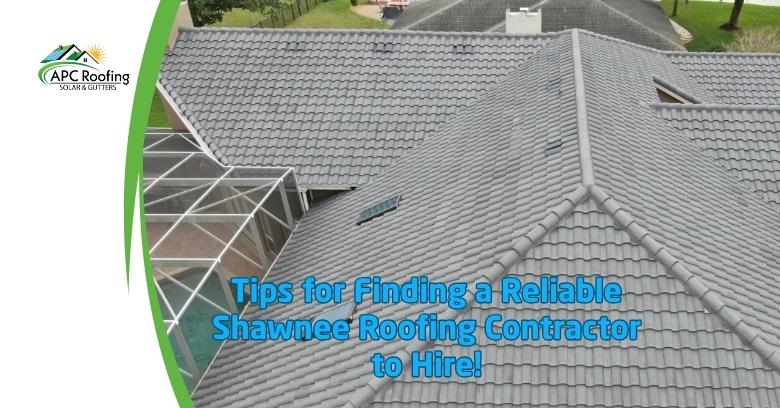
APC Roofing works on earthenware and cement coverings, new and old, whether the job is a single slipped piece or an entire slope reset.
Dial 407-270-1129 and a roofer will say in everyday words what is overhead.
What Sits Over the Attic: The Basics
Fired clay or cast concrete takes the sun and sheds most rainfall, but an underlayment beneath the surface is what keeps the house dry. Gusts can push a little moisture up under the courses during a downpour, so the layer beneath ends up draining that seepage away.
A split tile is not the same thing as a leak indoors, because the underlayment underneath has not been disturbed. Water through torn underlayment can track across the boards before it lets go, and the damp patch may form far from where it entered.
Picking a Material: Points of Contrast
A clay piece starts as earth pressed to a profile and baked, and the color runs all the way through the body. Years of sun leave a slope of this kind looking much as it did, and a well-made piece absorbs very little rain.
Concrete tile is formed from a wet sand and cement blend and hardened by curing, and on many brands the color is a thin coat on the face. Constant sun slowly bleaches the brightest side, while a broken corner shows the gray inside. A just-installed piece looks brighter than those around it, and only seasons outdoors soften the mismatch.
Cement-based pieces take in more rain than fired clay, and at the colder end of our territory, soaked-up moisture turns to ice within the body. Cycle after cycle, the face can start to flake, and makers publish a rating for resistance to that kind of wear.
Choosing a Profile – What Differs Up Close
Traditional barrel work alternates a trough turned up with a cap turned down, and the design comes from centuries of Mediterranean building. The S profile merges the hollow and the crown into one molded form, and builders put it on many newer homes.
A plank-like flat piece looks like slate or wood shake from the curb, and rain runs over the face of each course instead of along a channel. Barrel and S patterns collect pine needles and leaves in their hollows, but a smoother surface gives a breeze the chance to blow debris off.
Weight and Structure: Conversions and Options
Ordinary tile presses down with several times the mass of shingles, and a house built under tile had its rafters sized for that from the start. Converting from a lighter material brings a load the original design never counted on, and a sagging ridge line can be the result.
An engineer needs to confirm what the rafters and supports can carry before that conversion goes ahead, and a few homes call for stiffening before the new covering is laid. Some manufacturers offer a lighter concrete tile, and a house that could not hold full-thickness pieces may still manage that option.
How Tile Stays Put – Rules and Practice
Nails or screws driven through the head are a standard hold, and plenty of installations hook the courses over wood strips set across the slope. Elsewhere a two-part foam bonds each tile to the underlayment, while mortar holds the entire field on still others. A clip at the exposed end adds resistance to lifting in several designs, while local code and the manufacturer decide which mix is permitted.
Gusts tug most at the outer rows and along the hips and ridge, and the fastening schedule tightens at the perimeter. At the coastal end of our territory, hurricane codes set tougher requirements for keeping tile down, so screw spacing and foam coverage are designed to pass inspection. A replacement is fastened to match the surrounding courses, and a stuck unit ripped free can ruin the adjoining ones.
Waterproofing Underneath – Heat and Sunlight
Organic or fiberglass felt soaked in asphalt has been the standard for generations, while synthetic rolls and self-adhered modified bitumen came later. The pocket under the covering stays warm for months and wears on the underlayment, so an unsuitable sheet loses its flexibility years early.
The units overhead keep daylight off the material under them, so a knocked-out tile opens a patch that degrades fast. A dry ceiling below a missing piece is no reason to put off the replacement, because rain soon finds its way into the deck.
New Waterproofing: Step by Step
A major job on clay or concrete can keep the original pieces, removed by hand and stacked in the yard, and sagging boards get repaired. Brand-new waterproofing follows, and the stored tile returns to its old position. The finished result looks just like the original, but the protection underneath is at the start of its years.
Not every piece survives being moved twice, and older material fails at a higher rate. Any new tile has to interlock with the courses around it, and a line still in production supplies an identical match. A retired shape is covered with salvaged stock or a close equivalent, and weathered color is seldom duplicated.
Chipped Pieces: Trees and Hail
Much of the harm on these roofs is done by someone walking, and the visitor is often a sweep who came up for the chimney or an antenna. The top of a ladder set against the edge cracks the lowest units, while a stabilizer arm set against the siding keeps the weight off.
A heavy bough dropping onto the slope ruins many tiles at once, so keeping trees clear of the house removes most of that risk. Large hailstones at the colder end of our territory can split a unit clean through, but small stones rarely scar the face.
Moving Across a Slope: For Other Trades
The lapped end of each piece bears weight well, but its unsupported middle can crack when stood on. Where the tile is curved, the hollow pan is the place to step and the crown is not, and a path used over and over gets boards so the load is shared.
Damage done by a heel commonly sits on the hidden face, so breakage builds up on a roof without anyone knowing. Anyone putting equipment on tile should arrange the approach with a roofer beforehand, and tile beneath every bracket gets removed and put back properly.
In the Valleys – Trimmed Pieces
An inside corner takes the drainage of the slopes beside it, and tile jobs lay a metal liner in it. Where the pieces are cut back decides how wide the open strip is, and a gap left too slim overflows in a heavy downpour.
The shortened pieces flanking the metal usually lack a hole, so foam, clips or wire ties hold them in place. Leaves and needles caught in the channel hold water back, and the water then works sideways beneath the pieces.
The Capping – Air and Closures
Where slopes meet at the peak and down the outside corners, a row of rounded trim covers the joint, and many older roofs hold it in mortar. Bedding that has seen years of temperature swings opens up in cracks, so the pieces loosen and crumbs wash down the slope.
Newer work fastens the trim to a raised wood or metal nailer along the joint, and a flexible closure or foam seals the gap beneath. Breathable versions double as exhaust vents, while baffles inside turn back rain and insects.
Along Chimneys and Walls: Lifting and Reworking
Anywhere tile stops against brick or siding, bent sheet metal lines the corner, and an overlapping counterflashing keeps weather from getting behind its upper edge. With tile, that flashing is broad at the base and ends in a raised lip, while nearby tile is trimmed to leave a clear path for runoff.
Caulk used as a shortcut loses its grip after a few summers, so the same spot takes on water again. A durable repair removes the pieces nearby and reshapes or replaces the metal, and the underlayment along that edge is redone while it is open.
Things That Pass Through: Details That Differ
A drain line through the deck is wrapped by a base flashing joined to the underlayment, with a soft lead or aluminum skirt molded to the tile above. A rubber boot made for shingles cannot seal against a rolled profile, and rain gets under its flange.
Every skylight, vent and panel mount requires flashing suited to the tile, and a bolt driven through a piece without it opens a path for rain.
The Lowest Course – Setting the Angle
Barrel and S shapes leave an arched opening at the lower end of every piece, where birds and wasps nest and blown rain enters if nothing blocks the way. A closure made for the purpose is installed along the fascia, and weep holes in it still let water drain out.
Eave pieces have nothing below them to angle them up, and a riser strip gives them the rise they need. Without that support, the end pieces hold water on their faces, and a dip along the lower edge shows from the yard.
Heat and Tile – When Debris Interferes
The shape of many profiles, or the battens beneath, holds the covering off the deck, and air can move through the cavity below. Heat picked up by the pieces is swept out before it sinks through, so the underlayment stays cooler.
Across a long summer, air conditioning tends to run less, and the mass of dense pieces also slows warmth on its way inside. A packed eave or a fully mortared ridge blocks the draft, and heat builds up in the dead space.
Caring for the Surface: Upkeep Choices
A chalky white bloom on newer concrete pieces is efflorescence, salts drawn out of the mix, and rain carries it off over time. Growth in the laps traps water against the pieces, and at the colder end of our territory freezing slowly flakes the surface.
High-pressure spray erodes concrete and scours glazed clay, and the stream drives water under the courses. A cleaner made for roofs, rinsed off gently, removes growth more safely, while clearing the valleys and gutters by hand keeps drainage open.
What Shows Inside and Out – Worth a Closer Look
- A tile has slipped and left a dark strip uncovered, so whatever held it has let go.
- A hole in the pattern marks a piece that has come off, and the sheet beneath now sits open to sun and rain.
- Broken shards lie on the ground below the eave, which means something overhead has cracked.
- Small lumps of mortar sit near the porch, so the trim along the peak may be losing its hold.
- A yellowed mark grows across a ceiling, while the opening that feeds it may lie higher up the slope.
- Wallpaper lifts or drywall discolors on a wall under a roof junction, which suggests trouble with the flashing there.
- Mats of green or black growth choke the laps, and valleys nearby may be collecting debris.
- A low spot shows along the front edge of the covering, which can mean a missing riser or soft wood behind the fascia.
APC Roofing and Tile Roof Repair in Clermont Florida – Seen, Recorded, Explained
An inspection opens by walking the slopes one by one, while the material, the profile and the way the pieces are held are noted. Each valley, ridge line, wall joint and eave detail is examined, and a few pieces are lifted where the state of the sheet beneath decides the answer. Inside, the attic is checked for stains and soft boards, as discolored wood traces where water traveled.
Every fault is photographed, and the extent is measured. A plain written report sums up the findings, with each recommendation explained. A healthy sheet with damaged pieces on top is labeled a repair job, and a worn-out underlayment is flagged plainly. The owner decides how to proceed, and holding off for now is a fair option.
Tile Roof Repair for Properties in Clermont Florida: Read From the Deck Up
Call 407-270-1129 and describe the problem.
Mending or Relaying – Slope by Slope
A cracked piece, a loose cap or a leaking wall joint is usually a contained problem, so the surrounding covering is left as it is. The condition of the underlayment determines whether a relay is needed, and a worn-looking surface proves nothing either way.
A slope with a failed sheet from top to bottom is relaid, while slopes that are still sound are left in place. An underlayment laid all at once tends to wear out evenly, and the parts spared may follow within a few seasons.
Aging Well – Upkeep Matters
Quality fired clay can keep going for a century or more, while concrete serves for decades, if somewhat fewer. The waterproofing below is replaced well before the pieces, so its state is normally what schedules the next big job.
Periodic checks and clean drainage let the roof reach its full span, but a neglected one may lose its underlayment early under one missing piece. Every service figure is an approximation, not a commitment, since grade, attachment and flashing quality push it up or down.
Pitch and Decking: The Groundwork
A tile covering works by overlap, with no sealed joints between pieces, which means the angle has to be sufficient for water to run off. Near the bottom of the allowed range, the underlayment is upgraded, while under the stated minimum tile is not the right covering.
The deck beneath has to be sound, so damaged sheets are swapped out while everything is exposed. Gutters carry on where the tile leaves off, because an overflowing trough can send water under the eave pieces.
To look into Tile Roof Repair in Clermont Florida, phone APC Roofing at 407-270-1129. What the slopes show is photographed and set out in writing, and the decision stays with you.
Verified

Verified
Verified
Verified
Verified