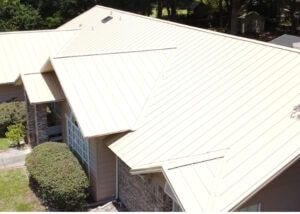
There’s a bubble the size of a dinner plate on the flat roof over your back room, or the surface has cracked into a pattern like dried mud. Maybe it’s already dripping. You need flat roof repair in the Denver metro, and you’d like to know what kind of repair before someone hands you a quote for a whole new roof.
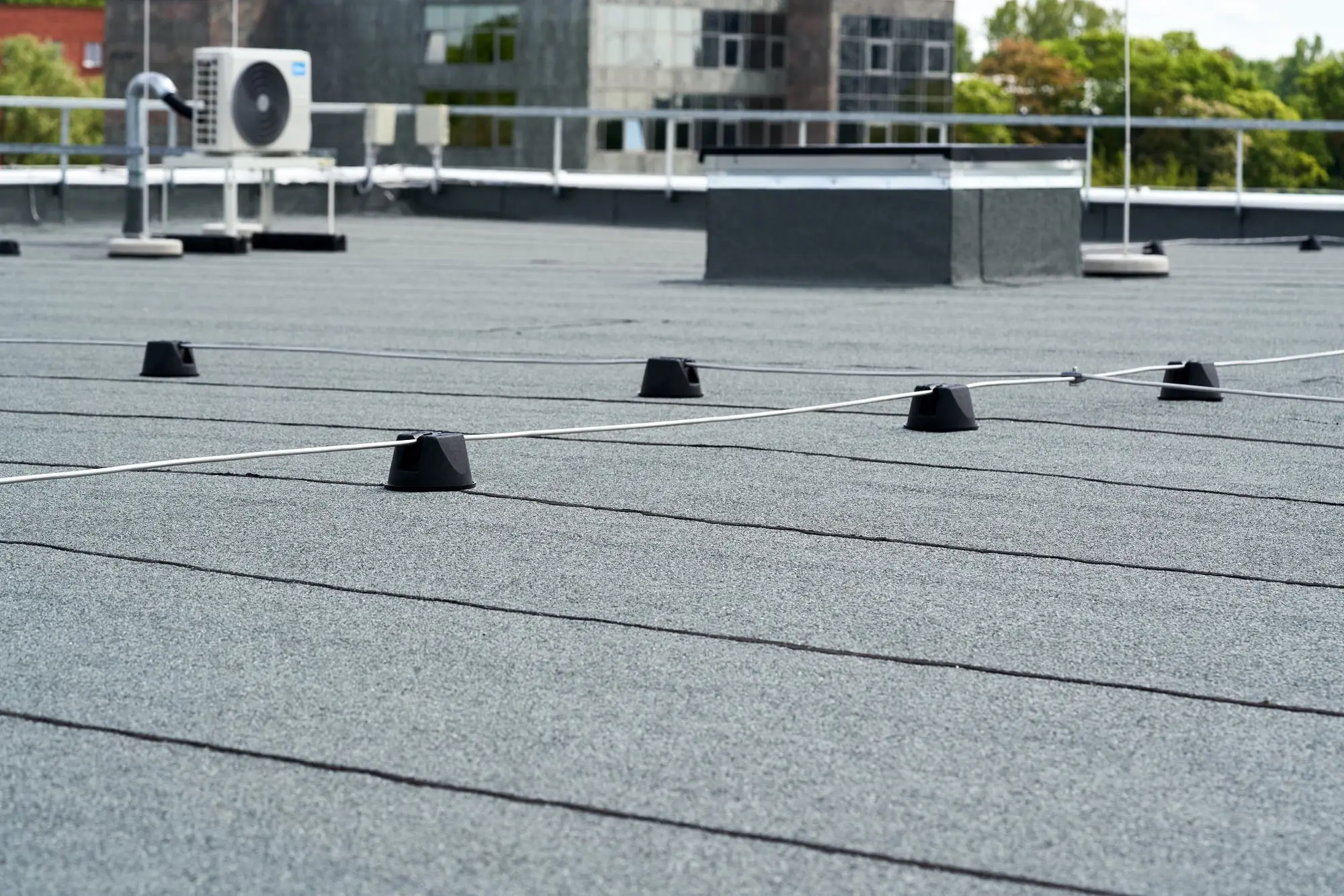
Flat roofs are confusing because there are several different kinds, and they don’t get fixed the same way. A patch that works on one can fail on another within a season. You deserve someone who figures out what’s on your house first.
APC Roofing is a GAF Certified contractor, licensed and insured, and your inspection and estimate are free. Call 720-902-6940 and a roofer will identify the roof, find the source of the leak and walk you through the options with photos.
What kind of flat roof do you have?
On homes around the metro, the flat or low-slope part of the roof is usually one of these.
Rolled roofing. Asphalt sheets with a granule surface, overlapped and nailed or glued. It’s common on older porches, sheds and garages, and it looks like a wide, flat shingle.
Built-up roofing. Several layers of asphalt and felt, often topped with gravel. You’ll hear it called tar-and-gravel. It’s heavy, and it was standard on flat roofs for a long time.
Modified bitumen. Asphalt reinforced with rubber or plastic, rolled out in sheets and either torched, glued or self-adhered. It usually has a granule surface like rolled roofing, but it’s thicker and tougher.
Single-ply membranes. Black EPDM rubber or white TPO. These are what most newer flat roofs use, and our EPDM roofing in the Denver metro page covers them in detail.
The first three are all asphalt-based, and that’s what most people mean when they search for asphalt flat roof repair.
Asphalt flat roof repair in the Denver metro
Asphalt flat roofs fail in a few familiar ways, and most of them can be repaired when they’re caught early.
Blisters. A raised bubble means air or moisture got trapped between layers. A small, firm blister may be left alone and watched. One that’s soft, cracked or growing gets cut open, dried out and patched in layers.
Cracking and alligatoring. Years of strong sun at this altitude dry out the asphalt until the surface cracks in a crazed pattern. Small areas can be patched. When it covers most of the roof, the material is near the end of its life.
Open laps and seams. On rolled roofing and modified bitumen, the overlaps are the weak points. Heat, cold and snowmelt work them loose. A lifted lap gets cleaned, re-adhered and covered with a strip of matching material.
Bare spots. On gravel roofs, wind and foot traffic move the gravel around, leaving the asphalt below exposed to the sun. Those spots age fast and crack first.
Wall and edge flashing. Where the flat roof meets a wall, a chimney or the main sloped roof, the flashing often fails before the roof does. A lot of “flat roof leaks” are really flashing leaks.
On homes, repairs on modified bitumen are often done with cold-applied adhesive or self-adhered patches rather than an open torch near wood trim and siding. The right method depends on what’s already there.
Why the stain isn’t under the leak
Water that gets through a flat roof rarely drips straight down. It runs along the deck or through the insulation and comes through the ceiling wherever it finds a seam in the drywall or a light fixture. The stain over your kitchen table may come from a lap three or four feet away.
That’s why patching the spot right above the stain often doesn’t work. A good repair starts by tracing the water back, checking every seam, flashing and penetration upslope of where it showed up. Our roof leak repair page has more on tracking down leaks.
Patch, partial replacement or new roof?
A single blister, a lifted lap or a cracked boot around a vent pipe is a patch job. That’s often the right call on a roof that’s otherwise in decent shape.
A section replacement can make sense when one area has failed, like the low corner where water always sits, but the rest of the roof is still sound.
A new roof is the better money when the surface is cracked across most of the roof, the insulation underneath is wet, or the same leak keeps returning after repairs. Many homeowners replace an old asphalt flat roof with a single-ply membrane at that point. You can see how that works on our flat roof installation in Denver page.
You’ll get photos of what we found and a clear recommendation, and the decision is yours.
How it works
- Book your free inspection. Call 720-902-6940 or request a free estimate online.
- Get a clear, honest assessment and estimate. We identify the roof type, trace the leak, check the flashing and drainage, and give you photos with a written estimate. Financing is available through Aqua Finance, Fortifi, Hearth and Home Run Finance.
- Your roof gets fixed and the site gets cleaned up. Repairs are scheduled for dry weather so the materials bond, and the crew cleans up before leaving.
A small blister or open lap rarely stays small through a Colorado winter. Freeze-thaw cycles pry it wider, and the insulation below starts to soak up water you can’t see.
Flat roof repair questions from Denver metro homeowners
Should I pop a blister on my flat roof?
No. Cutting it open without drying and patching the layers properly lets water straight in. Have it looked at.
Can you repair a tar-and-gravel roof?
Yes. The gravel is cleared from the damaged area, the layers are repaired, and the gravel goes back to protect the surface from the sun.
Can a flat roof be repaired in winter?
Some repairs can, on dry days with the right materials. Others need warmer weather to bond well, so a temporary fix may come first and a permanent one in spring.
Why does my flat roof keep leaking in the same place?
Usually because the repair went over the stain, not the source. Or the real problem is drainage: water that sits for days will keep finding the same weak spot.
Book your flat roof repair
Call 720-902-6940 or book your free inspection online.
The goal is a dry ceiling, a flat roof that drains and a repair you only have to pay for once.