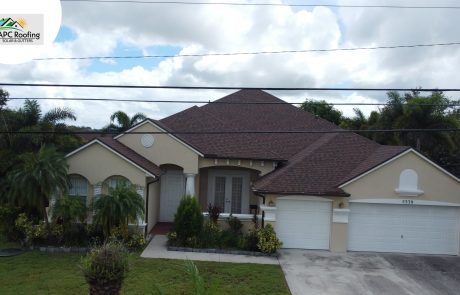
Considering Concrete Tile Roofing for Your House in Overland Park Kansas?
APC Roofing builds, patches and relays coverings of every common shape, down to the waterproof sheet beneath the surface.
Call us at 913-398-5020 and a roofer who knows tile will explain what is going on overhead.
How the Covering Is Built – Worth Knowing
The visible pieces take the weather and send most rain toward the gutters, but the waterproofing itself is an underlayment on the deck below. In a driving storm, some moisture always blows in beneath the courses, so the layer beneath ends up draining that seepage away.
A cracked piece of tile does not by itself put a stain on a ceiling, since the sheet beneath is normally intact. Moisture that slips through failed underlayment tends to run along the wood for a while, so the mark it leaves can sit well away from the opening.
Choosing Between Materials: Points of Contrast
A clay piece is formed from wet earth and fired at high heat, and the color runs all the way through the body. Sunlight over many decades barely alters how the roof appears, while quality material turns away nearly all the rain that lands.
Concrete is pressed from sand, cement and water, then cured instead of fired, and on a lot of lines the pigment sits in a slurry near the face. Constant sun slowly bleaches the brightest side, while a fresh break reveals plain gray underneath. Swapping in one unit leaves an obvious bright patch, and only seasons outdoors soften the mismatch.
Concrete absorbs noticeably more rain than good clay does, and at the colder end of our territory, soaked-up moisture turns to ice within the body. Repeated cycles like that can flake the face away, so makers grade products by how well they resist that damage.
Profile Options – Style and Drainage
Mission-style barrel work lays separate pans and covers in alternating rows, and the design comes from centuries of Mediterranean building. A one-piece S tile combines hollow and crown in a single form, and builders put it on many newer homes.
The flat kind sits nearly level on the deck and resembles slate or thick shake, and rain runs over the face of each course instead of along a channel. Rounded designs hold on to needles, twigs and leaves, but a smoother surface gives a breeze the chance to blow debris off.
Weight Considerations – Switching Coverings
Ordinary tile presses down with several times the mass of shingles, and a home planned for tile was given rafters to match. A move up from a lighter covering adds weight the house was never meant to carry, and an undersized frame can sag under it over the years.
Ahead of a conversion, a structural engineer checks the rafters, the spans and the walls they bear on, and the findings may call for bracing or extra members. Reduced-weight concrete exists as well, and a house that could not hold full-thickness pieces may still manage that option.
How Tile Stays Put – Rules and Practice
Many pieces take a nail or screw through a hole at the upper end, and plenty of installations hook the courses over wood strips set across the slope. A foam adhesive laid under the tiles is another common method, while other homes have their whole field bedded in mortar. Certain systems add a clip that hooks the nose of each piece, and the approved combination comes from the maker and the local code.
Wind pulls hardest at the eaves, rakes, hips and ridges, so those courses get additional fastening. At the coastal end of our territory, hurricane codes set tougher requirements for keeping tile down, so adhesive coverage and screw spacing are engineered to comply. A repair has to work with whatever holds the neighboring courses, and a foam-set unit pried out carelessly can crack the ones beside it.
The Underlayment: What Is at Stake
Old roofs mostly carry asphalt felt, frequently doubled, while self-adhered bitumen and synthetics are the newer options. The underlayment spends summers in a warm, enclosed pocket, so a sheet not rated for those conditions goes brittle early.
The units overhead keep daylight off the material under them, and wherever a gap opens, sunlight breaks the exposed patch down quickly. Even with the rooms dry, a missing piece deserves prompt action, since water passing a weathered membrane soaks into the plywood.
Starting Over Underneath – Matching Replacements
On a big project the pieces often come off one at a time and are stacked nearby, and weak spots in the sheathing are repaired. A new underlayment is laid across the whole area next, and the same tile goes back where it came from. Nothing about the outside of the house seems to change, while everything that stops water is starting over.
A share of the pieces cracks while being lifted, stacked or carried, and old, brittle stock fails more often than newer stock. Each new piece has to sit flush with its neighbors, and a design that is still manufactured can be matched exactly. A discontinued shape is patched with salvaged stock or the closest substitute available, and even the best option can differ slightly in shade.
Damaged Pieces: Prevention and Care
Plenty of the tile that fails was stepped on, and the walker is frequently a painter, a sweep or a satellite installer. An extension ladder laid on the bottom course can break it, while a stabilizer arm set against the siding keeps the weight off.
Big limbs crash through a whole patch when they fall, so keeping trees clear of the house removes most of that risk. At the colder end of our territory, severe hail punches through clay and concrete, while lighter strikes tend to bounce off.
Walking on Tile – Boards and Routes
The lapped end of each piece bears weight well, but pressure on the middle, with nothing behind it, splits it clean. With a curved profile, feet go in the low pan and stay off the hump, while boards laid over the covering take the traffic.
From above, a unit trodden on in the wrong spot can look intact, and faults of that kind pile up unreported. A solar or satellite installer headed up there should coordinate access with a roofer, so brackets land on the deck with the covering reset around them.
Valley Lines: Width and Upkeep
The inside corner where slopes meet collects the runoff of both, and under tile it carries a broad pan of sheet metal. How far back the pieces are trimmed sets the open width, and a cramped gap lets a hard rain climb out over the tile.
Many shortened pieces at the edge are too small to keep a nail hole, and foam, clips or tie wire keep them from sliding. Litter that piles up in the valley dams the flow, so water spreads sideways under the covering.
The Capping: Old and Newer Methods
Along the peak and the sloping outside corners, a run of curved trim closes the joint, and many older roofs hold it in mortar. Heat and cold crack bedding of that kind as it ages, and pieces work loose while grit collects in the gutters.
Many newer roofs mechanically fasten the trim to a raised support rail, with foam or a flexible strip sealing beneath. Certain versions breathe, letting attic air escape at the peak, but they are shaped so rain and insects cannot enter.
Dormers and Chimneys – Common Faults
A vertical surface rising from a slope gets an angle of sheet steel turned up its face, and a counterflashing cut into mortar joints covers it. Tile calls for a wide pan at the base, with a turned-up hem, while shortened tile sits clear so runoff drains freely.
Sealant smeared along the joint cracks within a few seasons, and water comes back through the same place. A durable repair removes the pieces nearby and reshapes or replaces the metal, while the underlayment there is redone before the covering goes back.
Through-Roof Parts – Rubber Boots
A drain line through the deck is wrapped by a base flashing joined to the underlayment, and a lead or soft aluminum sleeve is dressed down over the tile to shed water. A boot designed for asphalt cannot close the gaps a curved piece leaves, so rain tracks in beneath its flange.
Skylights, attic vents and solar mounts each need flashing made for a tile shape, and a rail foot fastened through a piece without it takes on water.
Along the Eave – Keeping the Line Straight
At the gutter, each curved piece leaves an open mouth beneath it, and birds, wasps and blown rain get in unless something fills the gap. A preformed closure piece runs the length of the fascia, and weep slots in it allow trapped water to drain.
Pieces at the eave lack a course below to lift their noses, so a riser or raised board makes up the difference. Low-set pieces at the gutter tend to pond water, and an uneven line at the bottom shows from the ground.
Heat and Tile – Debris at the Edges
Rolled shapes and batten systems keep the pieces lifted above the boards, leaving a channel where outside air can flow. The draft strips heat away before it travels downward, so the waterproofing stays cooler.
Through a hot season, the air conditioner has less to do, while thick material slows the warmth moving through it. Nests and litter at the lower edge, or solid mortar up top, stop the flow, and the pieces then hold heat against the deck.
What Collects Up There – What to Leave Alone
Efflorescence, a pale mineral bloom, often appears on concrete in its early years, and weather tends to clear it without help. Moss and lichen hold moisture in the laps and hollows, so at the colder end of our territory freezing can wear the face away.
Power washing strips the finish that gives concrete its color, and it drives water in beneath the courses. A gentle rinse with a roof-safe cleaning solution lifts moss without harm, and it helps even more to clear valleys and gutters by hand.
Clues Around the House – Worth a Closer Look
- One unit sits lower than its neighbors, which points to a broken fastener or a failed bond.
- One spot has lost its covering entirely, and the sheet beneath now sits open to sun and rain.
- Fragments land on the lawn or among the shrubs, and the break they came from may be out of sight.
- Mortar pieces sit in the grass below a ridge, as the old bedding up top gives way.
- A water stain appears on an upstairs ceiling, though the leak itself may start far from that spot.
- Streaks run down an inside wall below a chimney, and the metal pan there may be clogged or torn.
- Heavy growth darkens whole sections of the covering, and the affected pieces stay wet long after rain.
- The line along the bottom edge dips or waves when seen from the yard, and the board under the last course may have softened.
How APC Roofing Takes On Concrete Tile Roofing in Overland Park Kansas – Plain and Careful
Every slope is walked before anything else, while the material, the profile and the way the pieces are held are noted. Valleys, ridges, wall junctions and the eave are then looked at closely, and a handful of pieces are raised where the sheet below is in doubt. Up in the attic, stains and softened sheathing are looked for, as discolored wood traces where water traveled.
Anything wrong is photographed, and its size is measured. A plain written report sums up the findings, with each recommendation explained. If the sheet beneath holds and the damage is only on top, a repair is the answer, and an underlayment that has failed is named as such. Choosing a path is left to the owner, with waiting one of the options.
Concrete Tile Roofing for Properties in Overland Park Kansas – Looked at Closely
Dial 913-398-5020 and tell us what you have noticed.
Spot Work Versus Relaying – Sound Slopes and Failed Ones
Single faults, like a broken piece or a loose cap, usually sit in one place, so the surrounding covering is left as it is. What decides between that and a relay is the state of the underlayment, and a worn-looking surface proves nothing either way.
Where the underlayment has failed across a slope, those courses are lifted and relaid, and slopes still in good shape stay as they are. Where the whole roof got its underlayment together, it ages at a similar pace, so a relay of the rest may come soon after.
Tile Over the Years – Upkeep Matters
Dense, well-fired clay can see several generations, while concrete endures for decades without quite matching it. The waterproofing below is replaced well before the pieces, and it is usually what calls for the next large job.
Regular looks and clear gutters keep the covering in good order, whereas neglect lets a single gap ruin the sheet early. Any figure for years is an estimate, not a promise, as grade, hold-down and flashing detail all change it.
What Has to Be Underneath: The Groundwork
Water leaves a tile roof by running over lapped courses rather than through sealed seams, which means the angle has to be sufficient for water to run off. Shallower pitches get a sturdier underlayment, and under the permitted limit another covering does the job better.
The deck beneath has to be sound, and rotten or delaminated wood is replaced while the roof is open. Gutters are part of how the roof drains, and once they fill, water can climb under the front row.
If you are thinking of Concrete Tile Roofing in Overland Park Kansas, phone APC Roofing at 913-398-5020. The slopes are walked and the findings are put in writing, and what happens next is up to you.
Verified

Verified
Verified
Verified
Verified