You inherited a building, or bought one, and nobody handed you the roof’s history. Maybe a tenant just reported a drip near the back office, or a hailstorm came through and you have no idea whether it did any harm. Commercial roofing in the Denver metro is hard to plan for when you can’t see the roof and every contractor seems to tell a different story.
That uncertainty is the hard part. A roof is one of the biggest line items on a building, and a surprise replacement can wreck a year’s budget. You deserve a plain account of what’s up there, what it needs now and what can wait.
APC Roofing is a GAF Certified contractor, licensed and insured, and in business since 2017. We repair, re-roof and install low-slope and metal roofs on small commercial buildings, and the inspection is free. Call 720-902-6940 to set up a time.
Commercial roofing in the Denver metro starts with what’s on your roof
Most owners can’t answer three basic questions about their roof: what it’s made of, how old it is, and how many layers are already up there. Those answers drive almost every decision that follows, so that’s where a good inspection starts.
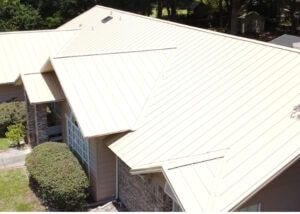
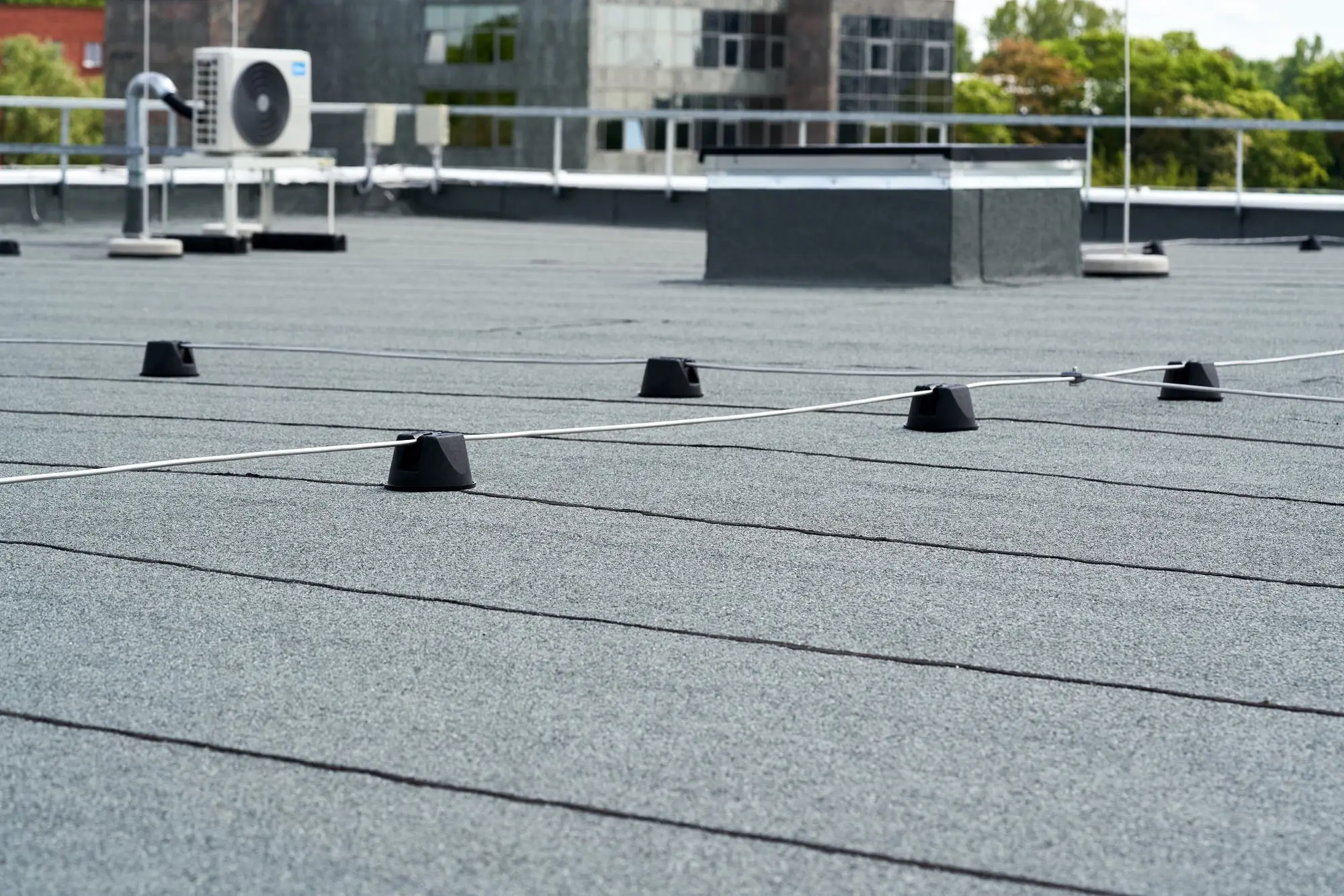
The system. Most commercial roofs around the metro are one of a few types. TPO is a white single-ply membrane with heat-welded seams. EPDM is a black rubber membrane with taped or glued seams. Built-up and modified bitumen roofs are older asphalt-based systems, often with a gravel or granule surface. Metal panel roofs show up on shops, warehouses and newer low-rise buildings.
The layers. Building codes generally allow one new roof over one existing roof. If there are already two, the next roof has to start with a tear-off. That one fact can swing a re-roof budget a long way, and it’s easy to check with a core cut.
What’s under the surface. Wet insulation is the hidden problem on flat roofs. It stops insulating, adds weight and rots the deck, all while the membrane on top looks fine. A moisture survey or a few small core samples show where water has spread.
What the Front Range climate does to a commercial roof
A low-slope roof in Colorado takes a different kind of beating than one at sea level.
Hail lands straight down on a flat roof instead of glancing off a slope, and older membranes that have lost their flexibility can bruise or crack. Snow sits on a flat roof for days, and meltwater that refreezes at a drain or scupper can back up into the nearest weak seam. At this altitude the sun is strong, which dries out and shrinks membranes faster. Big daily temperature swings make the whole roof expand and contract, and that strain shows up first at seams, edges and flashing.
None of this means your roof is in trouble. It means a roof here should be checked on a schedule and after big storms, not only when something drips.
Repair, recover or replace
Most commercial roof decisions fall into three buckets.
A repair fixes a specific problem: a split seam, a punctured membrane, a failed boot around a pipe or a loose edge. On a roof that’s otherwise sound, repairs are often the best money you can spend. Our commercial roof repair page covers how we find and fix leaks on a big roof.
A recover puts a new membrane over the existing roof. It can save the cost and disruption of a tear-off, but only when there’s just one roof up there and the insulation underneath is dry.
A replacement tears off down to the deck, fixes any damaged decking, and builds a new roof with new insulation and a new membrane. It makes sense when the roof is wet throughout, has two layers already, or has reached the point where repairs keep stacking up. Our commercial roofing installation page walks through that process.
The useful answer is often a mix: repair what’s leaking now, and plan the replacement for a budget year when it fits.
Keep the rest of your people off the membrane
A lot of commercial roof damage isn’t from weather. It’s from people. HVAC techs, sign installers and cable crews walk the same path to the same equipment, drop screws, set tools down on the membrane and cut through it to run a line. Over a few years that path wears through.
It helps to know who goes on your roof and why. Ask contractors to report anything they disturb, and have the roof checked after any big equipment swap. Walkway pads along the main routes can protect the membrane where traffic is heaviest.
Hail damage and your insurance
After a big storm, have the roof looked at even if nothing is leaking yet. Hail damage on a membrane can be small and easy to miss. If there’s damage, you file the claim with your insurer and pay your deductible. We document what we find with photos, write up an estimate and work with your adjuster.
How it works
- Book your free inspection. Call 720-902-6940 or request a free estimate online.
- Get a clear, honest assessment and estimate. We walk the roof, check the drains, seams, edges and penetrations, look for trapped moisture, and give you photos with a written estimate that separates what’s urgent from what can wait. Financing is available through Aqua Finance, Fortifi, Hearth and Home Run Finance.
- The work gets done and the site gets cleaned up. Work is scheduled around your tenants and the weather, and the crew cleans up when the job is finished.
A small leak on a flat roof doesn’t stay small for long. Water moves through insulation sideways before it ever shows on a ceiling tile, so catching it early keeps the fix small.
Commercial roofing questions from Denver metro owners
How often should a commercial roof be inspected?
Twice a year is common guidance, usually spring and fall, plus a check after any major hail or wind storm.
Can you tell me how much life my roof has left?
We can give you a straight read based on the membrane, the seams, the moisture under the surface and the number of layers. That’s usually enough to plan the next few budget years.
Do you work on metal commercial roofs too?
Yes. Metal panel roofs on shops and warehouses usually need attention at the fasteners, seams and flashing long before the panels wear out.
Will my business have to close during the work?
Usually not. Repairs and most re-roofs can be staged around your hours, with noisy or messy work planned ahead with you.
Talk to us about your building
Call 720-902-6940 or request your free inspection online. You can also see all our Denver metro roofing services.
The goal is a dry building, tenants who stop emailing about ceiling tiles and a roof budget with no surprises in it. Your satisfaction is our reputation.