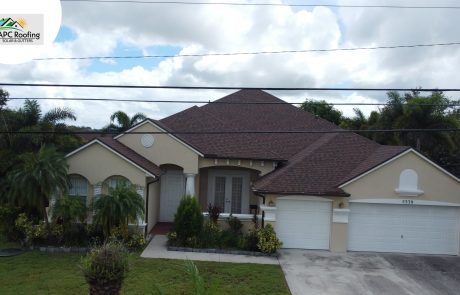
In Need of Storm Damage Roofing on a Property in Denver Metro Area?
APC Roofing climbs onto the shingles once bad weather has passed through, checking every edge and photographing what is there.
Call 720-902-6940 and a roofer will come out for a closer look.
Airflow Over a Sloped Roof – Reading the Uneven Pull
Along the eaves, the rakes and the ridge the force runs highest, and a wide center area sees far lighter duty. Air that gets under a raised lip pries at the shingle set above the lip, and a single fastener ends up holding that shingle down alone.
A corner of a house sits where two paths of wind meet, so a tighter attachment pattern goes into that area during installation. A row of shingles at that outside edge carries more push than a row set farther out, and a crew's added fastening there answers exactly that need.
An Invisible Step in Every Install: Not Done at the Factory
Every shingle carries a strip of sealant that fastens down to the course beneath, which is what keeps a shingle from lifting in a light breeze. A hard gust can break a bond across a stretch of roof, and a parted shingle rests unmoved for the moment, nothing showing on the surface.
A broken seal stays hidden until the wind picks up again, and rain then reaches nail heads left bare for the first time. A single shingle off a bond hurts nothing taken alone, but a whole run of parted shingles is an opening for the weather.
What a Bundle Label States – Often Misread
A test rig holds freshly made stock to a deck with every bond formed on purpose, and only then does a machine bring the airflow up to speed. A roof already carrying a season or two of harsh weather no longer behaves like unweathered asphalt, and a rating drawn from the original goods stops counting once weather sets in.
Fastening outside the marked zone leaves a shingle with a weaker hold, and a course can fail at a wind nobody would call extreme. An aged mat loses flexibility a new mat still carries, and a fresh-stock rating cannot speak for a weathered roof.
A Bruise in a Shingle's Mat: Under the Surface
At the colder end of our territory, stones fall heavier than anywhere else we cover, and a few minutes of that can change a covering for good. The force of a hailstone buries granules in the layer set below, and the struck spot goes soft under a thumb.
The core doing real waterproofing lies under a shingle's visible face, and a dent at that depth reaches the material that matters most. A struck shingle weathers faster than a sound shingle nearby, and small failures appear here and there once hail has covered a broad stretch.
The Rest of a Roof's Hardware: Quiet Evidence After the Fact
A jolt a covering absorbs still marks a gutter face nearby, and a mark left that way keeps the same shape for years. Rubber torn at a pipe penetration sends rain straight past a boot's seal, and the water that follows shows up in a room below. A gutter knocked about at the front still moves water as designed, while a crushed downspout backs water up above a crushed section.
Every light-gauge piece up on a roof gets a separate look on the same trip, so nothing made of trim is left out of a written record. Small dings in the metal and craters in the asphalt tend to come from a single storm, and the state of that hardware often hints at how hard the shingles were struck.
A Story in the Grit: More Than Dirt
A mineral coat baked onto a shingle screens the asphalt from direct sun, because an uncovered stretch dries out and cracks quickly. A downpour carries loosened grains along the slope into a gutter run, and the amount collected hints at the extent of a storm's toll.
Bare spots widen as the sheet beneath a bare patch dries out, and a covering left that way begins to fail in scattered places. Whatever collects at an outlet used to be part of the covering, and a roofer can trace the source back to the face above.
Driven Rain on a Slope – Joints That Rarely Get Tested
A lapped run of shingles handles whatever comes from directly above, but pressure coming from the side changes the entire calculation. A turbine housing passes rain through once wind reaches a certain speed, and drops fall well away from any actual break in the covering.
A Branch Across a Slope: Worth Opening Up
Sudden momentum drives an entire mass through one narrow point of contact, which puts extra strain on whatever framing lies beneath. Sheathing under a strike can split while the shingle above shows only a graze, which is why the attic gets a separate look after every storm.
A branch dragged across a roof by wind scours curved tracks through the granules, and the outline stands out clearly once the pattern is known. Fixing a split board means taking the covering off above the split, and the finished patch ends up wider than the mark visible above.
Signs Inside the Attic: Where the Story Is Plainest
A gleam higher up signals a gap in the roof, so a person can pin down the location before ever climbing outside. Moisture leaves rust at nail tips and a darkened trail through the wood, which lets a roofer trace the mark back to the break above.
Insulation flattened in one place shows where runoff has settled again and again, because crushed fibers hold far less warmth than fibers left airy. Wind forcing air through an opening can carry moisture well past the covering, which spares a sound roof plane from being opened for no reason.
Evidence Inside the House – What the Damage Tells You
Discolored edges spread outward from where rain finally let go, because the flow often runs along a rafter for some distance before falling. Peeling alongside a joint says the board underneath stayed damp for a while, and a small mark can sit directly under a much larger fault.
Water reaching a ceiling fan is reason enough to cut power to that circuit, and only after that switch is confirmed off does the cleanup begin. A dark line under a flue traces the outer face of the chase, so counterflashing set into the mortar gets a close look in a case like that.
Where Surfaces Come Together: What a Gale Finds
The assembly at a wall junction depends on staying tucked beneath the shingle layers while nailed in place at once, and a failure at either point alone can let rain through. A squall catching the end of a course can tear the drip edge loose, and the row along that run then has nothing holding the end down.
Ridge caps sit in the roughest airflow on a roof and can still come away as a unit, and slack fastening opens the seal on the seam sitting beneath. A vent unfastened at one end can rattle loose in a following gale, so insulation across a wide stretch can end up wet, not just underneath.
What Lets Daylight In – Where Leaks Start
The frame under a skylight stands above deck level on purpose, and every face of that structure gets a flashing cut just for that face. A direct knock can craze the outer pane of the unit while the inner pane stays sound, and nothing laminated gets mended in place.
Debris striking a plastic dome can leave a pattern that spreads with heat, so a hairline flaw rarely stays hairline for long in bright weather. Condensation locked inside a sealed unit cannot simply be wiped away, which calls for new glazing, not a wipe-down.
When the Rate Climbs Too High: Reading the Signs
Sheet flow off a wide slope can outpace the capacity built into that edge, and the surplus pours over the front lip instead of down a downspout. Leaves and grit washed off a roof can choke the drain opening at the point of collection, and moisture sitting in a clogged length can work beneath the trim over time.
A Placeholder, Nothing More: Made to Stay Put
Anything secured over a break can protect a house until the weather clears, because anything temporary is meant to come off once real repairs begin. A covering run over the ridge and down both slopes moves water downhill as designed, which curbs a sudden surge from ripping the covering free.
Loose weight on top rarely secures a sheet once the gusts pick up, and debris from that failure can end up scattered across the yard. Every penetration made in haste becomes one more spot to seal properly, which keeps the rest of a slope free of new punctures.
Putting Findings on Paper – a Straightforward Description
Every affected area gets photographed before anything is disturbed, which matters more than most homeowners expect going in. Each damaged spot gets a number attached in ordinary figures, because a mark's true size is hard to judge without a reference point.
A broken covering rarely stays exactly as the first storm left the surface, so waiting even a little loses detail nobody can get back afterward. Any review of the property draws on findings written up in ordinary language, and none of that material gets altered for anybody's benefit.
A Sudden Rush of Visitors: a Few Plain Questions
Vehicles with out-of-area plates can work a neighborhood for days after a big storm, but not every outfit working the area is a problem. A deal reached at a front door carries the same weight as one signed indoors, and reading every line before agreeing is always worth the extra minute.
A roofer with a nearby yard is easy to track down if a question comes up, which is no small consideration when picking who does the work. Pressure to sign a contract before anyone has been on the roof is worth resisting, and a damaged roof rarely changes meaningfully overnight.
Weakness That Compounds: Back Again
A slope carrying broken seals meets the next gust already at a disadvantage, which is why trouble on a battered roof tends to accelerate. A shingle bent back far enough to crease keeps a permanent line across the whole width, and granules often shed heavily from exactly that spot.
Water reaching a deck a second time can carry on into insulation and drywall well beyond that point, so work that started on a roof can spread into the rooms below. Sheathing soaked more than once loses grip on the fasteners driven into the wood, so that section has to come off along with the shingles above.
What a Storm Leaves Behind: Notes Worth Keeping
- Bare patches where a shingle used to sit, obvious from across a street.
- Dents in a vent hood, a cap or a length of trim, wherever thin sheet sits exposed.
- Granules washing out where a gutter empties, in amounts that keep returning.
- Daylight showing between roof boards overhead, with an attic lamp switched off.
- Discoloration that widens with every downpour, usually right under a roof plane.
- A dark line running down an interior wall, with no plumbing anywhere close by.
- Glass in a skylight chipped or broken, on any unit facing the weather directly.
- A gutter hanging away from a fascia board, anywhere along that run.
The Way APC Roofing Works on Storm Damage Roofing in Denver Metro Area: From the Call to the Finish
A visit opens at ground level, crossing the yard and the driveway for anything that came down, and dented gutters or downspouts get photographed up close from below. Each roof face gets covered on foot wherever conditions allow, and the attic gets checked from inside for anything missed from below.
Photographs, measurements and notes get written up and handed over in plain language, and every finding stays tied to a specific spot on the roof. The advice gets explained, not simply stated as a conclusion, and the decision on what happens next stays with the homeowner.
Storm Damage Roofing for a House in Denver Metro Area – Help From People Who Know Shingles
Reach us at 720-902-6940 and describe what is showing up indoors.
Snow on a Roof: Standing Up to More
The colder end of our territory sees falls deep enough to press down on the framing, and freezing and thawing in cycles makes the load denser over time. Frozen runoff at the roof's edge can pond meltwater on the slope, and a ceiling near the outside wall can stain as a result.
Up at the colder end of our territory, a lower roof beside a taller section collects drifting snow, which is often where sagging first becomes visible. Material breaking free can damage anything sitting beneath the eave, and hangers can bend under strain from a sudden release like that.
A Harder Grind for Roofing Material by the Water – Strain That Builds Fast
At the coastal end of our territory, a tropical system can settle over a house for most of a day, longer than a short spell anywhere else in our service area ever would. Repeated flexing over many hours can loosen what a quick gust would not touch, so shingles can lift well after a storm peaks rather than at the height of the storm.
Driven rain can reach seams that stay dry during the rest of the year, and interior cavities can stain as readily as ceilings do when that happens. Coastal practice generally asks more of every roof edge, so nothing gets put back with less holding power than the original had.
New Work Beside Old – What Stands Out Up Close
Material from a current production run differs in tone from shingles baked by years of sun, which holds true across every manufacturer's lineup. A mended area on a visible elevation can show up as a distinct patch, and that contrast tends to soften somewhat as the new shingles settle in.
Shingles no longer manufactured get swapped for the nearest equivalent, so a gap in tone or texture remains even with careful selection. A slope mended in several places can end up resembling a quilt, so a homeowner sometimes chooses to redo one full side instead of patching further.
Signs of Careful Work – the Details That Hold Up
New shingles settle smoothly into place once installation finishes, and the reveal of each course matches the courses nearby. Metal at a wall gets stepped in stages as the shingles rise, and nothing on that patch depends on a single bead of sealant.
No fastener shows on the visible face of a completed area, which is what a wind rating assumes will happen. A dated photograph of a finished repair is worth a homeowner keeping on file, as that record gives anyone looking later something firm to compare against.
If a search for Storm Damage Roofing brought you here after a storm in Denver Metro Area, get in touch with APC Roofing at 720-902-6940 and a roofer will come out and look the covering over. Every mark gets checked, measured and photographed on the visit, and a homeowner gets walked through exactly what was found.